
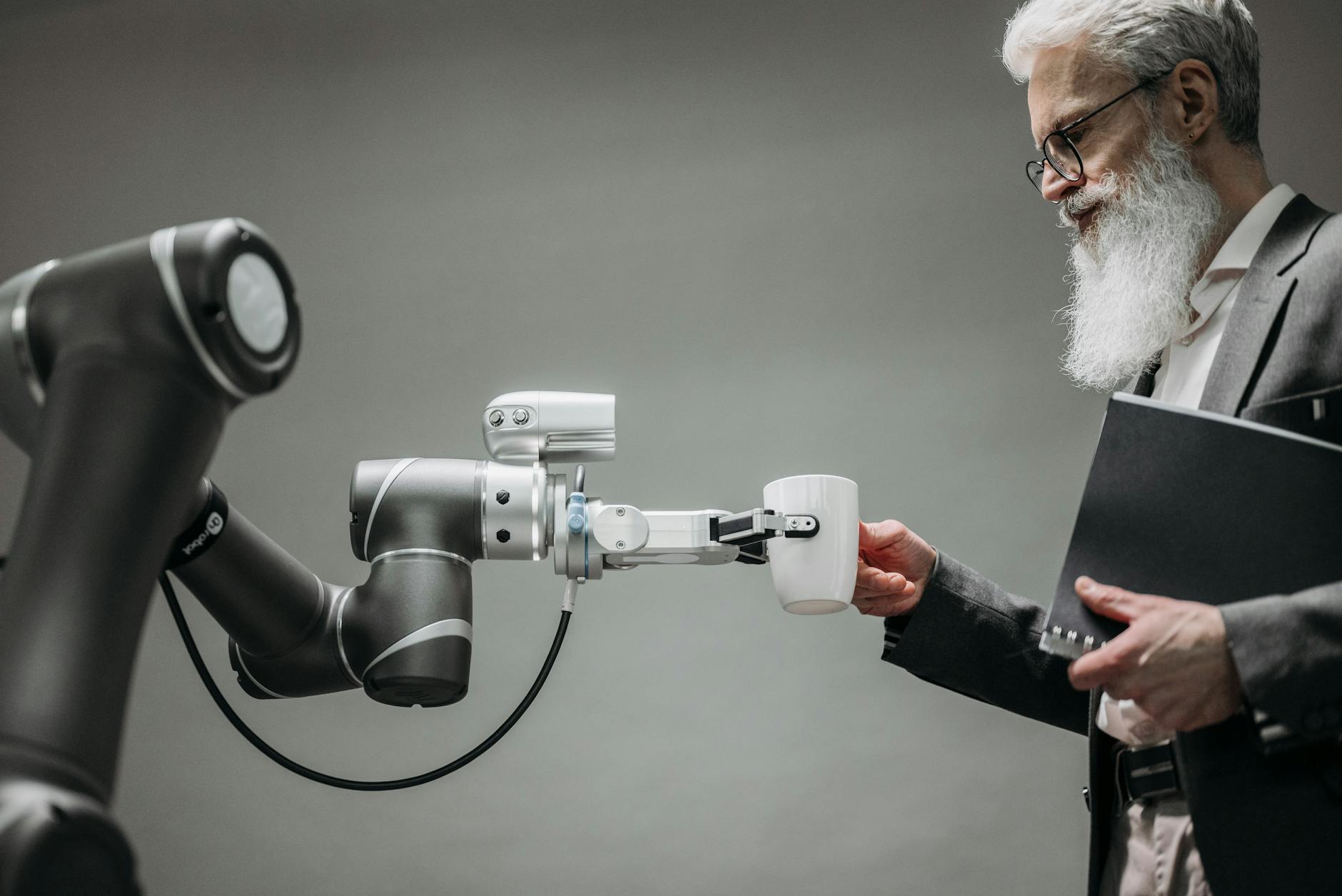
Imagine walking into an office where a friendly robot greets you, schedules meetings, and even drafts reports while you sip your coffee. The scene feels like science fiction, yet it’s rapidly becoming today’s reality. As AI systems grow smarter and more capable, a question that haunts boardrooms, classrooms, and coffee shops alike is whether these digital assistants will eventually replace human workers. In this post, we’ll unpack the data, examine real‑world examples, and explore how you can future‑proof your career in an era of intelligent machines.
What's Going On
Recent headlines have reignited the age‑old debate about automation and employment. A detailed investigation titled WILL AI TAKE AWAY JOBS? outlines both the hype and the hard facts, showing that while some roles are vanishing, new categories are emerging at an unprecedented pace.
At the core of this transformation is the shift from rule‑based software to generative AI that can understand context, create content, and even make decisions. Large language models, computer vision, and reinforcement learning are no longer confined to research labs; they’re embedded in customer service chatbots, manufacturing robots, and financial analysis tools. This diffusion means that tasks once considered uniquely human—like drafting a contract or diagnosing a medical image—are now being shared with, or fully handled by, algorithms.
But the story isn’t just about job loss. History teaches us that technological revolutions tend to reallocate labor rather than annihilate it. The steam engine didn’t make blacksmiths obsolete; it created entirely new industries that required different skill sets. Today’s AI wave follows a similar pattern, with the difference that the speed of adoption is dramatically faster, thanks to cloud computing and open‑source ecosystems.
Why This Matters
Understanding the ripple effects of AI on employment is crucial for policymakers, educators, and business leaders alike. A recent piece titled Remote care gets boost highlights how AI‑driven telehealth platforms are reshaping the healthcare workforce, enabling doctors to focus on complex cases while AI handles routine monitoring. This shift not only improves patient outcomes but also demands a new blend of clinical and technical expertise.
The broader picture extends to every sector—from logistics, where autonomous trucks promise 24/7 delivery, to creative industries, where AI‑generated art and music challenge traditional notions of authorship. Workers who can navigate these hybrid environments will find themselves in high demand, while those who cling to narrowly defined, repetitive tasks may face heightened vulnerability.
Who feels the impact the most? Young professionals entering the job market, mid‑career workers whose roles are being automated, and even retirees looking to upskill. Governments must rethink social safety nets, while companies need to invest in continuous learning programs that align employee growth with evolving technology stacks.
What It Means for the Industry
From an industry standpoint, AI is not a monolithic force but a collection of specialized tools that can be strategically deployed. Companies that treat AI as a competitive advantage are redesigning their business models. For instance, manufacturers are integrating AI‑powered predictive maintenance to reduce downtime, while retailers use recommendation engines to personalize shopping experiences at scale.
This strategic integration often hinges on the underlying hardware. Edge‑AI chips, which process data locally on devices, are gaining traction because they reduce latency and protect privacy. A recent market analysis titled Taiga Launches OS-5 Software showcases how new software ecosystems are unlocking the potential of these chips, allowing even small businesses to run sophisticated AI workloads without massive cloud bills.
The implications for talent acquisition are profound. Recruiters now look for hybrid skill sets: data literacy combined with domain expertise, creativity paired with algorithmic thinking. Organizations that foster cross‑functional teams—where engineers, designers, and business analysts collaborate closely—are better positioned to innovate and adapt as AI capabilities evolve.
What Happens Next
Looking ahead, the trajectory suggests a continued blending of human and machine labor. A financial commentary titled Chip Stocks Are Sliding – Is BrainChip illustrates how investors are betting on companies that specialize in AI hardware, anticipating that the demand for on‑device intelligence will only intensify.
In the near term, we can expect three major trends: first, an acceleration of AI‑augmented roles where humans and algorithms collaborate in real time; second, a surge in reskilling initiatives funded by both public and private sectors; and third, the emergence of regulatory frameworks that address ethical concerns, data privacy, and the equitable distribution of AI‑driven wealth.
For individuals, the roadmap is clear: stay curious, embrace lifelong learning, and cultivate skills that machines struggle to replicate—empathy, strategic judgment, and complex problem solving. By positioning yourself as a partner to AI rather than a competitor, you’ll not only safeguard your career but also help shape a future where technology amplifies human potential.


