
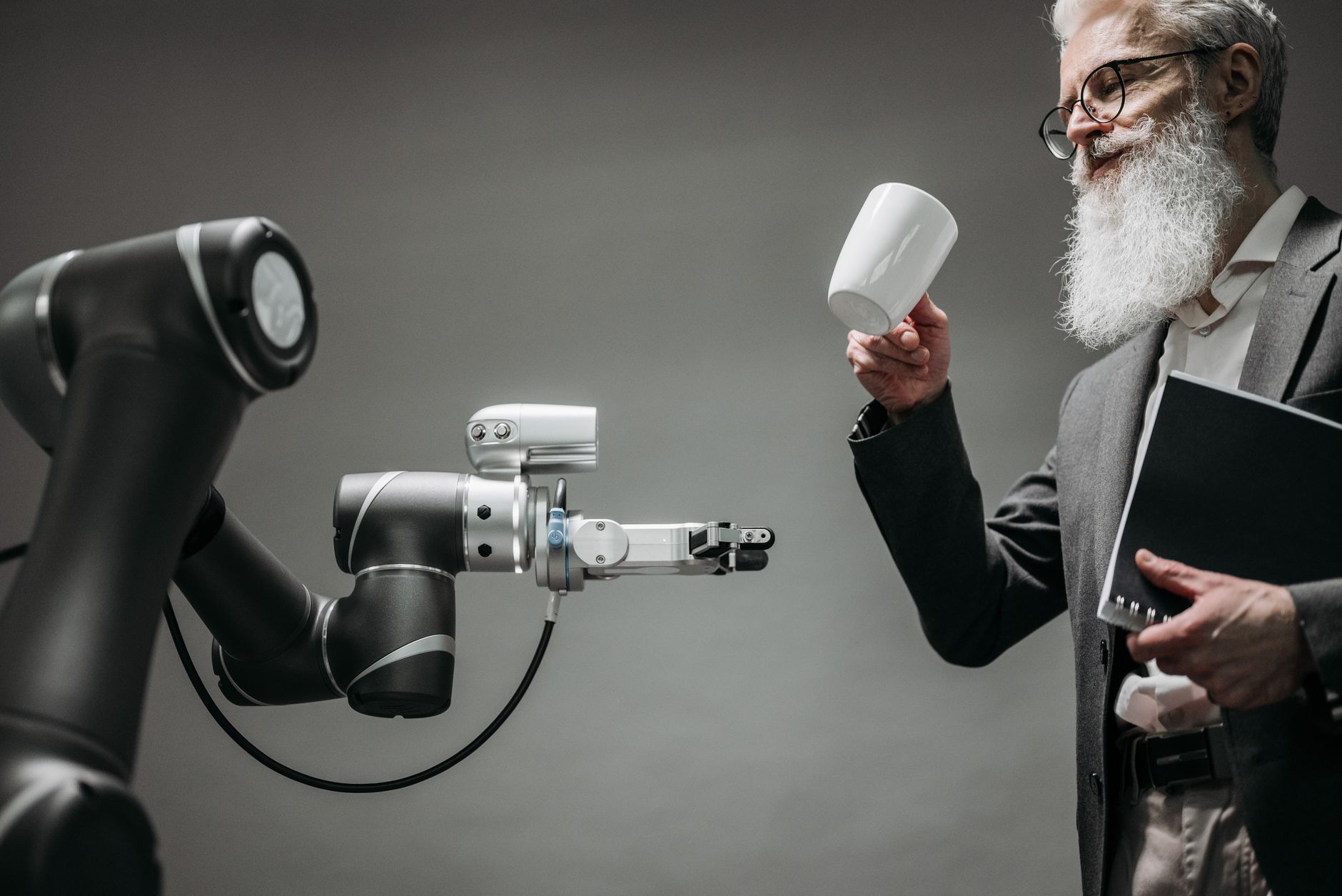
Imagine a boardroom where the biggest agenda item isn’t quarterly earnings or market share, but a roadmap for turning every employee into an AI‑savvy contributor. That’s the reality many forward‑thinking companies are already living, and it’s a glimpse of the new competitive frontier where talent, not just technology, decides who wins.
What's Going On
Across continents, businesses are scrambling to close the skills gap that rapid AI adoption has exposed. According to Why AI reskilling is the future of business, the surge in generative models, predictive analytics, and autonomous systems has outpaced traditional training programs, leaving a growing cohort of workers at risk of obsolescence. Companies that ignore the need for continuous upskilling risk not only reduced productivity but also a talent exodus as employees chase organizations that promise future‑proof careers.
What started as a niche concern for tech giants has now become a mainstream imperative. From small‑scale manufacturers integrating AI‑driven quality control to multinational banks deploying chat‑bots for customer service, AI touches every function. The result is a mosaic of skill requirements: data literacy, prompt engineering, ethical AI governance, and even AI‑augmented creativity. The challenge isn’t just teaching new tools; it’s reshaping mindsets so that AI is seen as a collaborator rather than a competitor.
Governments and industry bodies are stepping in, too. In many regions, public‑private partnerships are funding bootcamps, micro‑credential platforms, and on‑the‑job mentorship schemes. The overarching goal is clear: create a pipeline of workers who can translate AI capabilities into tangible business outcomes, from cost reduction to new revenue streams. As the pace of innovation accelerates, the window for reactive training closes, and proactive reskilling becomes a strategic necessity.
Why This Matters
The economic stakes are staggering. A recent study highlighted that AI could contribute up to $15.7 trillion to the global economy by 2030, but only if firms can harness it effectively. NDR 2026 Shows How Singapore Is Preparing Workers for AI illustrates how a nation can turn policy into profit: by upskilling its workforce, Singapore aims to capture a larger share of the AI‑driven value chain, positioning itself as a hub for autonomous vehicles and smart infrastructure.
For businesses, the upside is twofold. First, reskilled employees can drive faster adoption cycles, reducing the time from pilot to production. Second, a culture of continuous learning fuels innovation, as teams feel empowered to experiment with AI tools without fearing job loss. This cultural shift also mitigates the ethical pitfalls of AI deployment, because a well‑educated workforce is more likely to spot bias, ensure transparency, and uphold regulatory compliance.
Who feels the ripple? Everyone—from C‑suite executives budgeting for digital transformation to frontline staff whose daily tasks are being augmented by intelligent assistants. Investors are watching closely, rewarding companies that demonstrate a clear talent development strategy with higher valuations. Conversely, firms that neglect reskilling risk not only operational inefficiencies but also reputational damage as they appear out of touch with the future of work.
What It Means for the Industry
From a strategic standpoint, AI reskilling is reshaping competitive dynamics. Companies that embed AI literacy into their core talent strategy can pivot more nimbly, repurposing existing assets for new AI‑enabled products. For example, a logistics firm with a workforce trained in AI‑based route optimization can quickly expand into predictive maintenance services, opening fresh revenue channels.
Moreover, the rise of AI‑first business models is prompting a re‑evaluation of traditional hierarchies. Cross‑functional squads—mixing data scientists, product managers, and domain experts—are becoming the norm, and these teams rely on a baseline of AI competence across all members. This democratization of AI knowledge flattens decision‑making and accelerates time‑to‑market.
Technology partners are also adapting. Cloud providers now bundle AI training modules with their platforms, while edtech firms are launching AI‑specific micro‑credentials. In India, the startup scene offers a vivid illustration: TSplus Powers Secure Remote Access, Smarter Business Connectivity showcases how secure remote solutions enable distributed teams to collaborate on AI projects without compromising data integrity, further reinforcing the importance of upskilling in a hybrid work environment.
What Happens Next
The road ahead is both exciting and demanding. As AI models become more sophisticated, the depth of expertise required will expand beyond basic data handling to advanced prompt engineering, model fine‑tuning, and AI ethics stewardship. Companies are already piloting AI‑driven learning pathways that adapt in real time to an employee’s progress, ensuring that training stays relevant and personalized.
One particularly inspiring example comes from the construction sector, where a deep‑tech startup is redefining how buildings are made. Tvasta: The Indian Deep-Tech Startup Using Robotic 3D Printing blends AI with robotic 3D printing to fabricate structural components on site, dramatically cutting costs and timelines. Their success hinges on a workforce that can operate, maintain, and iterate on these AI‑enhanced machines—an outcome only possible through targeted reskilling programs.
In the coming years, we can expect a cascade of industry‑wide initiatives: government‑backed certification standards, corporate AI academies, and a surge in peer‑to‑peer learning platforms. Leaders who act now—by investing in comprehensive reskilling curricula, fostering a culture of curiosity, and aligning talent strategy with AI roadmaps—will not only safeguard their workforce but also unlock the full economic potential of artificial intelligence.


