
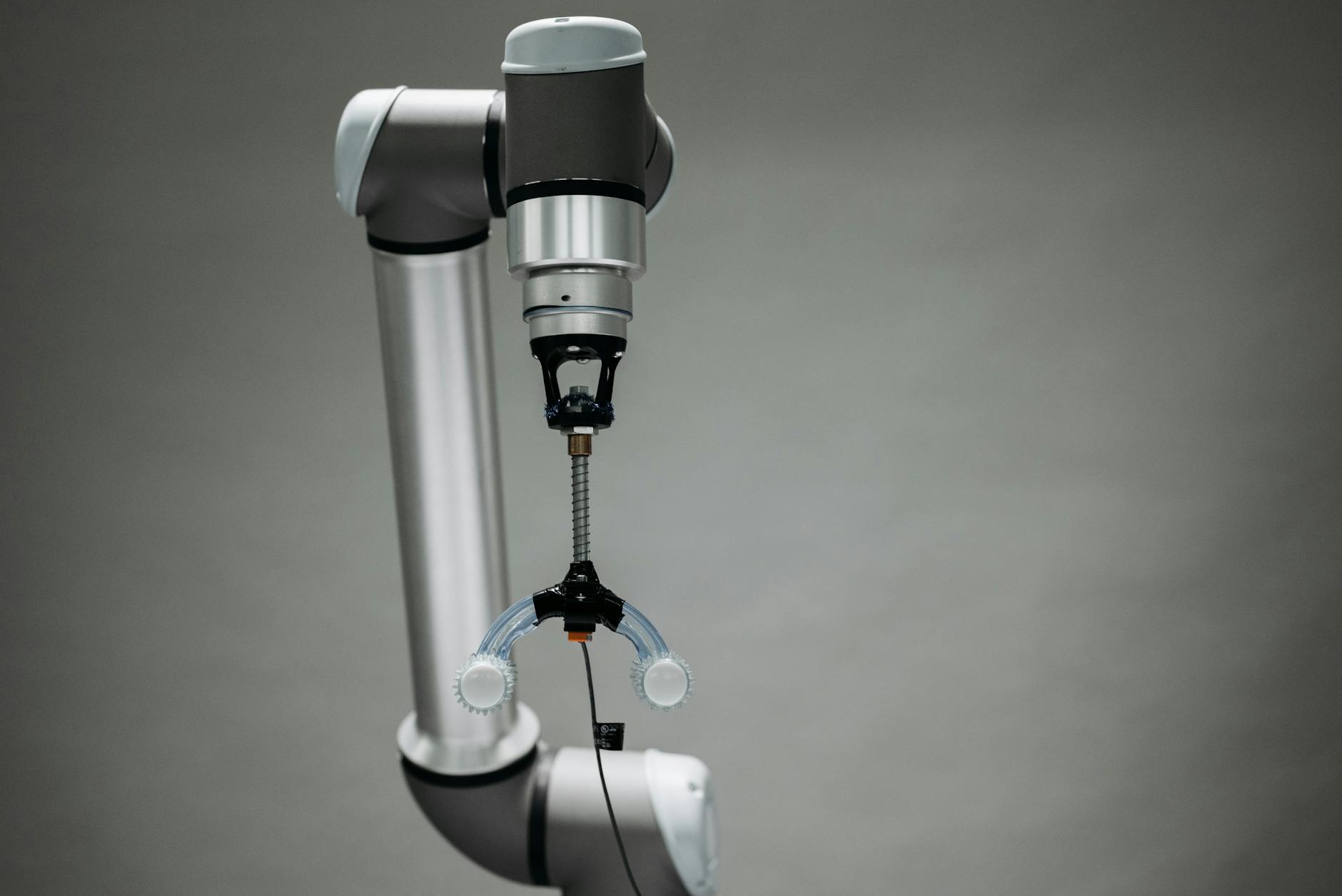
Imagine a factory floor where robots not only repeat tasks with precision but also learn, adapt, and collaborate with human workers in real time. That vision is edging closer to reality thanks to Universal Robots' latest breakthrough: the Gen 7 platform. This isn’t just an incremental upgrade; it’s a re‑imagining of how physical AI can be woven into the very fabric of production lines, supply chains, and even maintenance routines. In the next few minutes, we’ll unpack what Gen 7 brings to the table, why it matters to every stakeholder in the manufacturing ecosystem, and how it could set the stage for a new era of intelligent automation.
What's Going On
Earlier this week, Rutland Herald reported that Universal Robots has officially unveiled Gen 7, a platform that blends collaborative robot (cobot) hardware with a cloud‑native AI stack designed for rapid deployment across diverse industrial scenarios. The announcement came at the company’s annual “Future of Automation” summit, where executives highlighted a shift from static, pre‑programmed robots to dynamic agents capable of on‑the‑fly decision making.
Gen 7 builds on the success of the previous UR series by introducing a modular architecture that separates perception, cognition, and actuation into interchangeable software layers. This means manufacturers can upgrade the AI brain without swapping out the physical arm, dramatically reducing downtime and total cost of ownership. The platform also supports a new suite of sensors—high‑resolution depth cameras, force‑torque feedback, and edge‑AI chips—that feed raw data into a unified learning pipeline.
Beyond the hardware, Universal Robots has opened a marketplace for third‑party AI modules, allowing developers to sell plug‑and‑play intelligence for tasks like quality inspection, predictive maintenance, and adaptive material handling. The company claims the ecosystem will accelerate the “AI‑first” mindset, where new production lines are conceived with intelligence baked in from day one rather than retrofitted later.
Why This Matters
According to Financial Content, the timing of Gen 7 aligns with a broader industry pivot toward hyper‑flexible manufacturing, driven by volatile supply chains and the need for rapid product customization. By lowering the barrier to AI integration, Universal Robots is effectively democratizing advanced automation, making it accessible not only to large OEMs but also to midsize firms that previously hesitated due to cost and complexity.
From a macro perspective, the rollout could accelerate the adoption curve of physical AI, a technology that has long been confined to pilot projects and research labs. As more factories embed learning capabilities directly into their robotic workhorses, we can expect a cascade of efficiency gains—shorter changeover times, fewer defects, and lower labor intensity for repetitive or hazardous tasks. This shift also has a profound impact on workforce dynamics, prompting a surge in demand for engineers and technicians skilled in AI‑augmented robotics.
Who feels the ripple? End‑users ranging from automotive assemblers to food‑and‑beverage producers stand to gain, as do software vendors looking to tap into the new marketplace. Even logistics providers can benefit, since Gen 7’s flexible payload handling can be repurposed for warehouse automation, bridging the gap between production and distribution.
What It Means for the Industry
From a strategic standpoint, Gen 7 signals a maturation of the collaborative robot market. The modular AI stack encourages a “software‑first” approach, where value is derived as much from algorithms as from mechanical design. Companies that can rapidly develop domain‑specific AI models will have a competitive edge, turning what was once a hardware differentiation into a service‑driven advantage.
Moreover, the platform’s emphasis on edge computing dovetails with the growing need for data sovereignty and low‑latency decision making. By processing sensor streams locally, Gen 7 reduces reliance on constant cloud connectivity, which is crucial for facilities operating in bandwidth‑constrained environments or dealing with proprietary data. This architecture also aligns with trends highlighted in a recent market analysis that projects the Human Capital Management market to reach USD 62.02 billion by 2034, underscoring the importance of upskilling workers to manage AI‑enabled tools OpenPR.
Strategically, manufacturers can now think of their production lines as living systems that evolve over time. Continuous learning loops allow cobots to refine their motions based on real‑world feedback, reducing wear and tear while improving precision. This could translate into longer equipment lifespans and a shift from capital‑intensive upgrades to software‑driven enhancements, fundamentally altering CAPEX planning cycles.
What Happens Next
For those eager to dive deeper, Texas Standard provides a detailed look at the full announcement, including a roadmap of upcoming firmware releases and partnership programs with leading AI research institutions. The company has already lined up pilot projects with several Fortune 500 manufacturers, aiming to showcase real‑world ROI within the next 12 months.
Looking ahead, the true test will be how quickly the broader ecosystem—software developers, system integrators, and end users—can coalesce around the Gen 7 standards. If the marketplace thrives, we could see a cascade of innovations: autonomous material routing, AI‑guided quality assurance that learns from each defect, and even collaborative safety systems that anticipate human motion to prevent accidents. In the meantime, the launch serves as a clear signal that the era of static automation is ending, and a more intelligent, adaptable future is just around the corner.


