
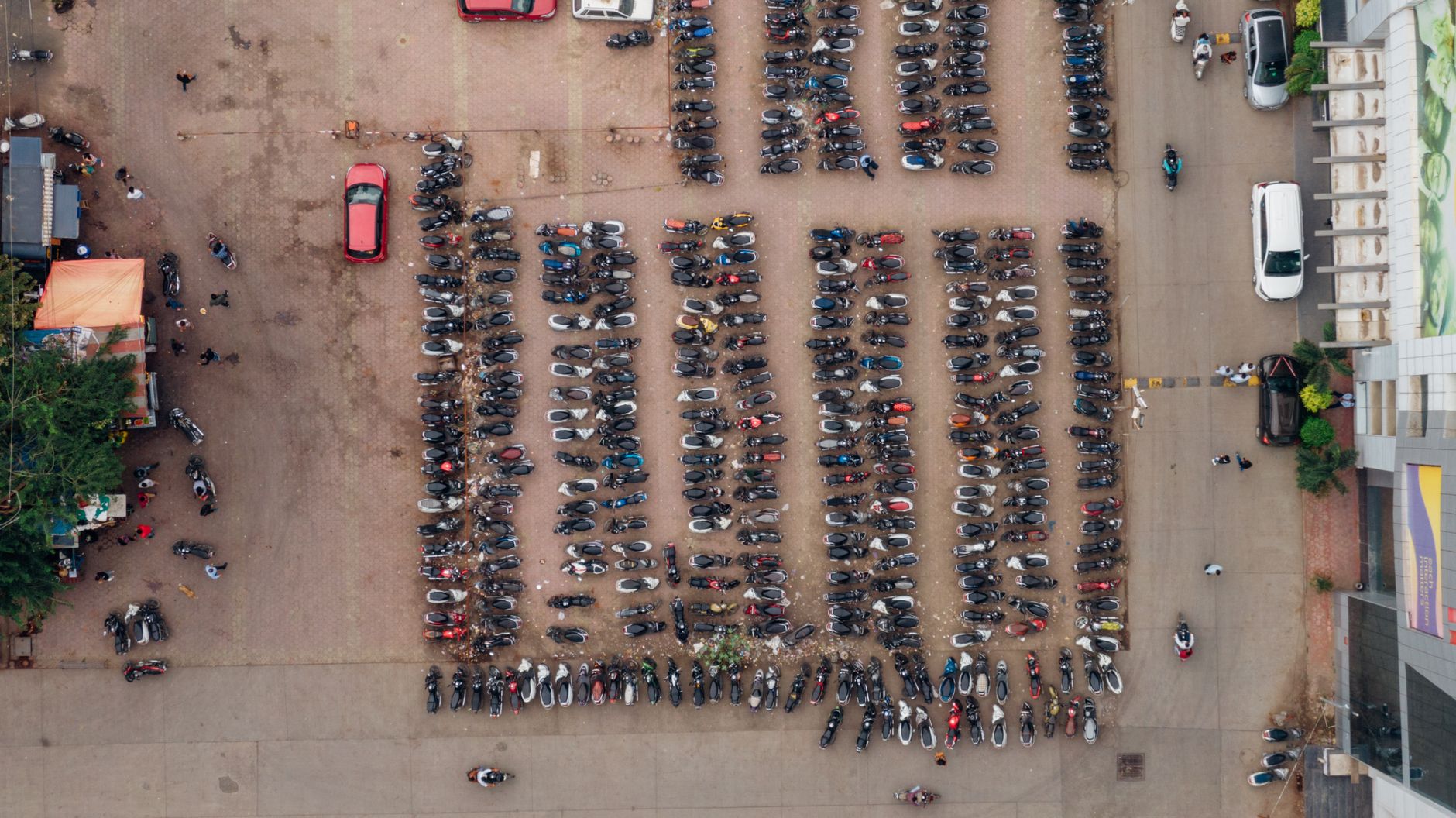
Imagine a bustling Indian street where the hum of two‑wheelers blends with the sleek glide of modern passenger cars. That everyday symphony is about to get louder, not because of traffic congestion, but because the market is poised for a surprising surge. According to a fresh ICICI research note, the two‑wheelers and passenger vehicle segments are expected to grow at an impressive 8‑10% annually through FY27, outpacing the broader automotive industry’s modest expectations. This isn’t just a statistical blip; it signals a shift in consumer confidence, financing dynamics, and even policy direction that could reshape the entire ecosystem.
What's Going On
India’s automotive landscape has long been a roller‑coaster of policy changes, fluctuating fuel prices, and evolving consumer tastes. The latest ICICI report, highlighted in Business News | Two-wheelers, Passenger, paints a picture of renewed optimism. The research team points to a confluence of factors: a robust pipeline of new models, expanding credit availability, and a demographic dividend that still favors younger, mobility‑focused buyers.
One of the standout observations is the resurgence of two‑wheelers, which have traditionally been the backbone of Indian personal transport. After a dip during the pandemic years, sales are now rebounding faster than many analysts anticipated. The report attributes this bounce back to aggressive pricing strategies, the rollout of fuel‑efficient BS‑VI compliant engines, and a wave of electric two‑wheelers that are beginning to capture market share. While the electric segment is still in its infancy, early adoption rates suggest a long‑term trajectory that could dramatically alter the sales mix.
Passenger vehicles, on the other hand, are benefitting from a different set of catalysts. The easing of GST on cars, combined with the government's push for “Make in India” manufacturing, has lowered the effective cost of ownership for many middle‑class families. Moreover, the proliferation of compact SUVs and premium hatchbacks—segments that blend aspirational design with practical dimensions—has broadened the appeal beyond traditional sedan buyers. Financing institutions are also loosening credit norms, offering longer tenures and lower interest rates, which directly fuels higher on‑road prices and, consequently, higher dealer margins.
Beyond domestic demand, the report flags export potential as a growth lever. Indian manufacturers are eyeing emerging markets in Africa and Latin America, where the price‑performance equation of Indian‑made two‑wheelers and compact cars is highly competitive. This export push is further supported by recent government incentives aimed at reducing logistical bottlenecks, such as streamlined customs procedures and tax rebates for export‑oriented units.
Why This Matters
The projected 8‑10% growth isn’t just a number on a spreadsheet; it reverberates across the entire supply chain. From raw material suppliers to after‑sales service networks, every stakeholder stands to gain from a healthier top line. Massimo Group to Unveil New Warrior 1500 recently announced a new UTV platform that, while not directly linked to two‑wheelers, exemplifies how ancillary manufacturers are gearing up for a broader mobility boom. Their investment in next‑generation platforms mirrors the automotive sector’s shift toward modular, scalable designs that can be quickly adapted for both two‑wheel and passenger vehicle applications.
From a financial perspective, the growth outlook is a green flag for lenders and investors. Banks that have historically been cautious about auto loans are now recalibrating risk models, factoring in higher repayment capacities driven by rising disposable incomes and better employment stability. This, in turn, fuels a virtuous cycle: more credit leads to more sales, which leads to higher production volumes, enabling economies of scale that further reduce unit costs.
Policy makers are also paying close attention. The Indian government’s commitment to electric mobility, embodied in the Faster Adoption and Manufacturing of Hybrid and Electric Vehicles (FAME) scheme, aligns perfectly with the two‑wheel segment’s electrification push. By coupling fiscal incentives with infrastructure development—such as expanding the network of fast‑charging stations—the policy environment is becoming increasingly conducive to sustained growth.
Finally, the consumer psyche is evolving. Younger buyers are less brand‑loyal and more value‑oriented, seeking vehicles that offer a blend of technology, safety, and affordability. This shift is prompting manufacturers to double down on features like connected infotainment, advanced driver‑assistance systems (ADAS), and even AI‑driven predictive maintenance—elements that were once exclusive to premium segments.
What It Means for the Industry
For automakers, the ICICI forecast serves as both a rallying cry and a strategic compass. Companies that have been slow to adapt—those still heavily invested in legacy internal combustion engine (ICE) platforms—may find themselves scrambling to catch up. Conversely, firms that have embraced platform sharing, modular architecture, and rapid prototyping are positioned to capture a disproportionate share of the upside.
One immediate implication is the acceleration of product pipelines. Manufacturers are likely to fast‑track the launch of new models, especially in the sub‑compact SUV and electric two‑wheel categories. This speed‑to‑market approach demands tighter coordination between R&D, procurement, and manufacturing, as well as more agile supply chain practices. Suppliers that can provide just‑in‑time components, especially semiconductors and battery modules, will become indispensable partners.
Another strategic dimension is the rise of “digital retail.” With the pandemic having entrenched online vehicle purchasing, dealers are now investing in virtual showrooms, AI‑driven lead scoring, and seamless finance integration. These digital tools not only enhance the buyer experience but also reduce the cost‑to‑serve, thereby improving profitability margins.
On the sustainability front, the growth of electric two‑wheelers dovetails with global decarbonization goals. However, the industry must grapple with the challenge of building a robust recycling ecosystem for batteries and ensuring that the electricity powering these vehicles comes from renewable sources. Companies that proactively address these concerns will earn a competitive edge in both domestic and export markets.
Lastly, the forecast underscores the importance of after‑sales services. As the vehicle fleet expands, the demand for maintenance, spare parts, and genuine accessories will surge. Service networks that can deliver quick, reliable, and tech‑enabled support will become key differentiators, especially in tier‑2 and tier‑3 cities where brand loyalty is still nascent.
What Happens Next
Looking ahead, the momentum generated by the ICICI outlook is likely to attract fresh capital inflows into the sector. Venture capitalists and private equity firms are already scouting for startups that specialize in battery technology, telematics, and mobility‑as‑a‑service (MaaS) platforms. The full announcement from Chinese Auto Electronics Maker YFore Bet about expanding manufacturing capabilities in the United States hints at a broader global realignment, where Indian automakers may seek strategic partnerships to tap into advanced component ecosystems.
Regulatory bodies are expected to tighten emission norms further, compelling manufacturers to fast‑track electrification roadmaps. Simultaneously, the government may introduce additional incentives for local battery production, mirroring successful models in other Asian economies. These policy moves will likely accelerate the shift from ICE to electric, especially in the two‑wheel segment where cost barriers are lower.
Consumers, too, will play a decisive role. As awareness of environmental issues grows, and as the cost of ownership for electric two‑wheelers continues to fall, adoption rates are projected to climb sharply. Early adopters will act as brand ambassadors, influencing peer decisions in tightly knit communities—a phenomenon that marketers can leverage through targeted social media campaigns and influencer collaborations.
In the broader macroeconomic context, the projected growth aligns with India’s ambition to become a $5‑trillion economy by the end of the decade. A thriving automotive sector contributes directly to GDP, employment, and export earnings, creating a virtuous loop that fuels further economic expansion.
Finally, a subtle but significant trend is emerging: the convergence of automotive and technology sectors. Companies that can blend vehicle manufacturing expertise with software development, data analytics, and AI will set the new industry standard. As the line between a car and a connected device blurs, the next wave of innovation will likely come from firms that view mobility as a platform rather than a product.
In summary, the ICICI forecast isn’t merely a bullish note; it’s a roadmap that highlights where opportunity, risk, and transformation intersect. Stakeholders who read the signals, adapt quickly, and invest wisely stand to reap the rewards of a market that’s poised for an 8‑10% growth surge over the next few years.
While the road ahead is promising, it’s not without challenges. Supply chain disruptions, raw material price volatility, and the need for substantial capital investments in electrification infrastructure could temper enthusiasm. However, the industry’s resilience—demonstrated by its rapid recovery post‑pandemic—suggests that these hurdles are surmountable with coordinated effort.
One final thought: as the automotive ecosystem expands, so does the importance of responsible growth. Companies must balance profitability with sustainability, ensuring that the surge in vehicle numbers does not exacerbate congestion or environmental degradation. By embracing circular economy principles, investing in clean energy, and fostering inclusive mobility solutions, the sector can achieve a growth trajectory that’s both robust and responsible.


