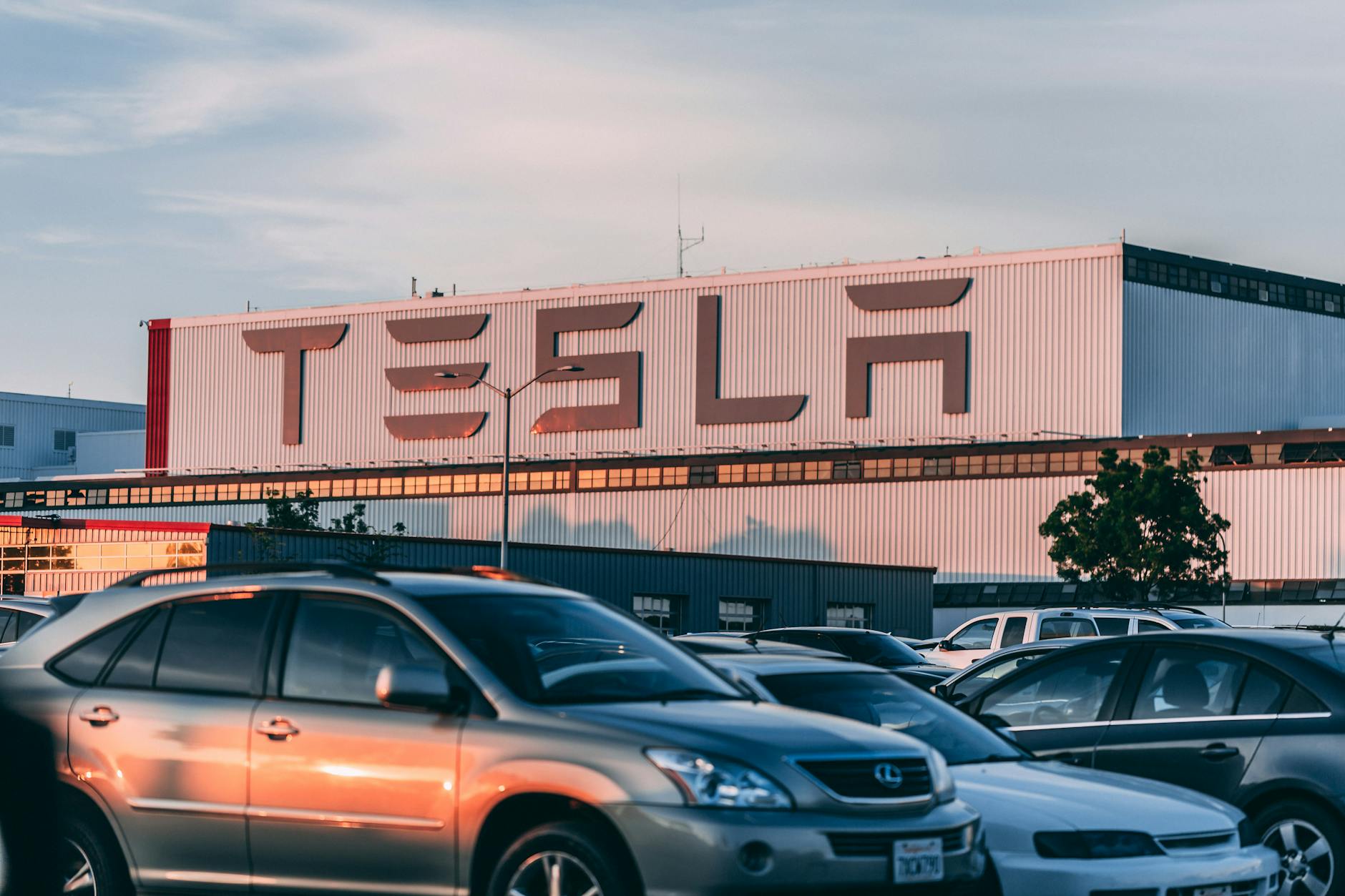
Imagine a single company that not only builds the world’s most coveted electric cars but also rockets humans to Mars. That’s the tantalising vision many tech watchers are flirting with as whispers of a Tesla‑SpaceX merger grow louder. Yet, while the idea sounds like a sci‑fi blockbuster, the reality is tangled in a web of international politics, export controls, and shifting alliances. Could the very forces that propelled these two giants to the forefront of innovation become the spanner that stops the gears from meshing?
What's Going On
Recent chatter in the industry has been fueled by a detailed piece titled Talk is growing of a Tesla‑SpaceX merger. The article outlines how Elon Musk’s two flagship ventures have increasingly overlapped – from shared supply chains for high‑performance batteries to joint research on autonomous navigation for both cars and spacecraft. While no formal talks have been confirmed, insiders claim that boardrooms at both firms have been “testing the waters” with confidential briefings.
At its core, a merger would create a vertically integrated behemoth capable of designing, manufacturing, and deploying everything from electric drivetrains to orbital launch systems. The synergies are tempting: SpaceX could leverage Tesla’s massive battery production capacity to power lunar habitats, while Tesla could tap SpaceX’s expertise in rapid prototyping and reusable hardware to accelerate its next‑gen vehicle platforms.
However, the timing is anything but smooth. The United States has tightened export‑control regimes, particularly around dual‑use technologies that have both civilian and military applications. Both Tesla’s AI‑driven autopilot chips and SpaceX’s rocket propulsion systems fall squarely into those categories. Any merger would need to navigate a labyrinth of Department of Commerce filings, International Traffic in Arms Regulations (ITAR) compliance, and possibly even a review by the Committee on Foreign Investment in the United States (CFIUS) if foreign investors are involved.
Why This Matters
Beyond the headline‑grabbing potential of a single “Mars‑car” conglomerate, the ripple effects could reshape entire sectors. A combined entity would wield unprecedented bargaining power over suppliers of rare earths, lithium, and advanced composites – commodities that are already under geopolitical strain. As Krishna Janmashtami for Techies reminds us, cultural moments can spotlight how technology intertwines with global narratives, and in this case the narrative is one of resource competition.
Investors are watching closely because the merger could unlock massive cash flows. SpaceX’s Starlink satellite broadband already generates billions in revenue, while Tesla’s automotive division continues to dominate the EV market. Merging the two could provide a diversified income stream that smooths out the cyclical nature of each business – a boon for shareholders and a potential catalyst for new financing models, such as blended equity‑debt instruments tied to both terrestrial and extraterrestrial assets.
On the regulatory front, governments worldwide would be forced to reckon with a single corporate entity that straddles critical infrastructure on Earth and in space. This raises questions about national security, data sovereignty, and the balance of power between private innovators and state actors. Countries that rely heavily on imported battery materials or satellite services could see their strategic autonomy eroded, prompting policy responses ranging from subsidies for domestic alternatives to stricter antitrust enforcement.
What It Means for the Industry
For competitors, a Tesla‑SpaceX merger would be a wake‑up call. Traditional automakers, already scrambling to catch up on electrification, would need to accelerate partnerships with aerospace firms to stay relevant. Meanwhile, emerging space startups might find themselves squeezed out of launch contracts as the merged entity leverages its massive fleet of reusable rockets and vertically integrated supply chain to offer lower prices and faster turnaround times.
The merger could also accelerate the convergence of AI, robotics, and autonomous systems across both land and space. Tesla’s neural‑network‑driven autopilot and SpaceX’s autonomous docking procedures share a common technological foundation. Unified R&D could produce breakthroughs in edge‑computing hardware that operates reliably under both Earth‑based traffic conditions and the vacuum of space, potentially spilling over into sectors like maritime shipping, agriculture, and defense.
From a talent perspective, the combined firm would become a magnet for top engineers, data scientists, and visionaries. However, it could also spark a talent drain from smaller innovators who fear being swallowed by a monolithic competitor. Universities and research institutions might respond by tailoring curricula to produce graduates fluent in both automotive and aerospace engineering, further blurring the lines between the two disciplines.
What Happens Next
While the boardrooms are still in the dark, the next few months will likely see a flurry of regulatory filings and strategic positioning. Analysts predict that the first public signal could come in the form of a joint press release about a “strategic partnership” – a classic pre‑merger move designed to test market reaction while buying time to address compliance hurdles. The full announcement, when it arrives, will almost certainly be accompanied by a detailed roadmap outlining how the merged entity plans to navigate export controls, manage foreign investment scrutiny, and align corporate governance across two very different cultures.
In parallel, the broader tech ecosystem will be watching the Nvidia acquires leading AI platform playbook for clues. Nvidia’s recent acquisition showed how a well‑timed deal can sidestep antitrust concerns by emphasizing complementary technologies rather than outright market domination. A similar narrative could be crafted for Tesla‑SpaceX, positioning the merger as a necessary step to achieve sustainable interplanetary transportation rather than a monopoly move.
Finally, it’s worth noting that the human side of the equation cannot be ignored. Employees, suppliers, and even customers will have to adapt to a new corporate identity that blends the fast‑paced, consumer‑centric culture of Tesla with the mission‑driven, risk‑tolerant ethos of SpaceX. As educators remind us – see In AI age, teachers tell students how to – setting clear boundaries and expectations will be crucial to harnessing the combined power responsibly.
Whether geopolitics will ultimately act as a catalyst or a roadblock remains to be seen. What’s certain is that the very discussion of a Tesla‑SpaceX merger has already shifted the conversation about how technology, policy, and ambition intersect on a global stage. If the spanner is indeed thrown, it will likely be a lesson in how even the most visionary enterprises must navigate the messy realities of an interconnected world.