
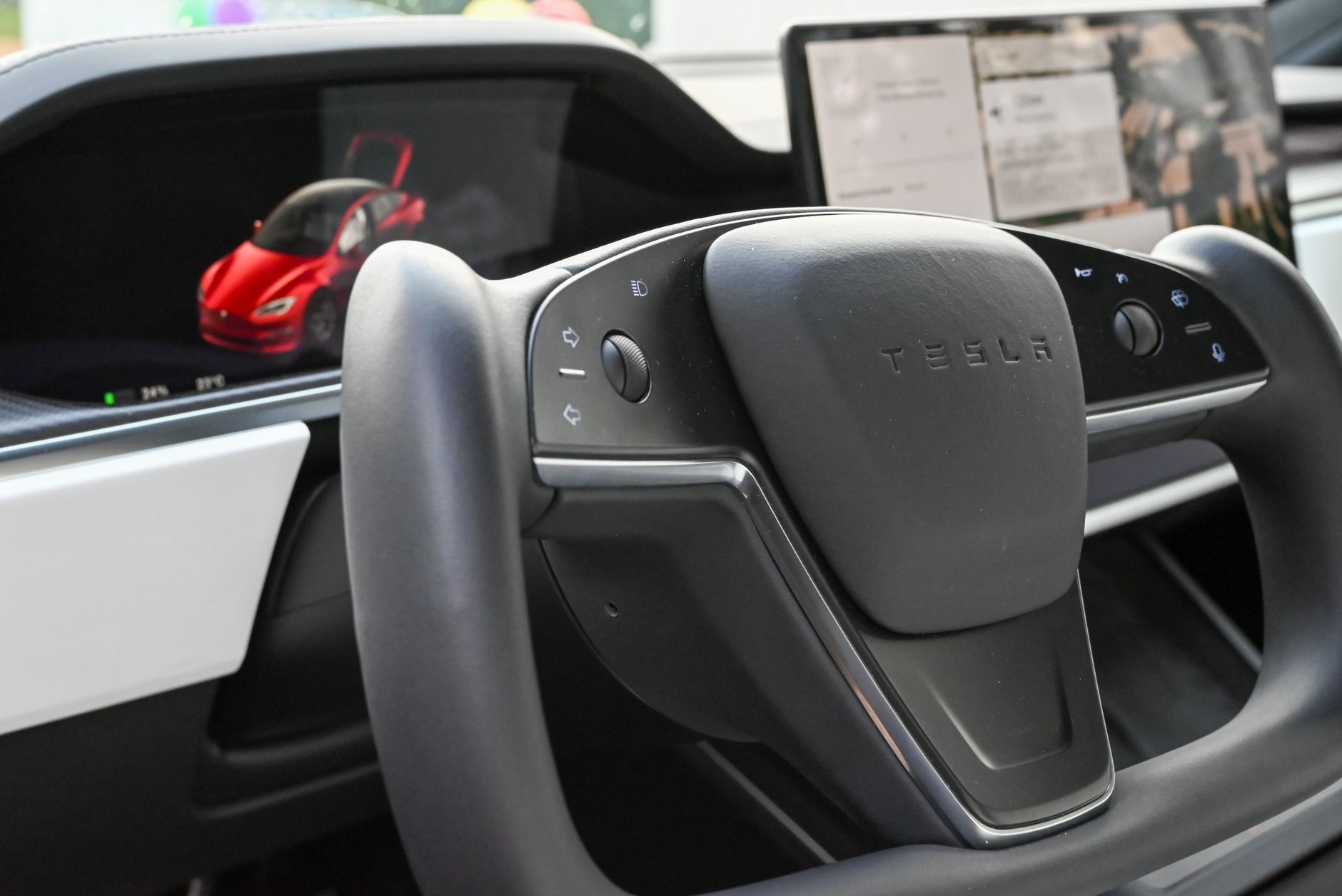
Imagine hopping into a sleek, futuristic cab that feels more like a spaceship than a car, only to find that it’s missing a steering wheel entirely. That’s the headline reality for Tesla’s latest venture into autonomous transportation. The company’s bold move to eliminate traditional controls has ignited a firestorm of debate, and now regulators are stepping in to investigate. The stakes are high: safety, consumer trust, and the future trajectory of self-driving tech all hang in the balance.
What's Going On
The Arkansas Democrat Gazette reports that Tesla’s latest Cybercab prototype has been flagged for a safety investigation. The vehicle, designed to operate fully autonomously, removes the traditional steering wheel in favor of a more minimalistic cockpit. Tesla claims this design enhances the passenger experience and streamlines the transition to a driverless future, but critics argue it raises serious questions about emergency control and regulatory compliance.
According to the Gazette, the investigation was triggered after a series of test drives in a controlled environment revealed unexpected behavior when the system encountered a sudden obstacle. While the autopilot managed to avoid a collision, the absence of a physical steering wheel meant that drivers had no manual override during the critical moment. Tesla’s internal safety team has been working closely with the National Highway Traffic Safety Administration (NHTSA) to assess the incident and determine whether the vehicle meets federal safety standards.
Beyond the immediate safety concerns, the Cybercab’s design philosophy reflects a broader trend in the automotive industry: a shift from human-controlled vehicles to fully autonomous systems. Tesla’s approach—eliminating the steering wheel and seatbelt in favor of a "passenger lounge"—has sparked a debate about how far the industry should go in removing traditional controls. Some argue that such radical designs could accelerate the adoption of autonomous vehicles, while others warn that they might erode essential safety nets that have kept drivers in control for over a century.
Why This Matters
In a recent feature, How Sonos rebooted itself illustrates how companies can pivot dramatically to stay ahead of the curve. Tesla’s Cybercab is a similar pivot—an attempt to reimagine the entire vehicle experience. This shift could have far-reaching implications for how we think about automotive safety, design, and regulation.
The automotive industry is already grappling with the rise of Level 4 and Level 5 autonomous systems, and the Cybercab’s steering-wheel-less design pushes the envelope even further. If regulators approve this model, it could set a new precedent for vehicle design, potentially allowing manufacturers to remove more traditional controls. On the other hand, a failure in the investigation could reinforce the need for human-in-the-loop controls, especially in complex urban environments where unexpected obstacles are common.
Consumers, too, are affected. The promise of a driverless cab is enticing, but the lack of a steering wheel may raise concerns about safety and control. Many potential buyers may be hesitant to trust a vehicle that cannot be manually overridden in an emergency. Moreover, insurance companies will need to reassess risk models, as the traditional metrics for driver behavior and vehicle safety may no longer apply.
What It Means for the Industry
From an industry standpoint, Tesla’s Cybercab represents a bold experiment that could either catalyze the next wave of autonomous vehicle design or serve as a cautionary tale. The elimination of the steering wheel challenges long-standing norms and regulatory frameworks that have been built around human control. If the investigation concludes positively, other automakers may feel emboldened to adopt similar designs, potentially accelerating the shift toward fully autonomous fleets.
Conversely, a negative outcome could reinforce the importance of human oversight. Regulators might introduce stricter guidelines mandating the presence of manual controls or fail-safe mechanisms in autonomous vehicles. This would create a new set of design constraints that manufacturers would need to navigate, possibly slowing the rollout of fully driverless models.
Strategically, Tesla’s move also signals a broader shift in how companies view the relationship between technology and consumer experience. By removing the steering wheel, Tesla is positioning itself as a pioneer of a new kind of mobility, one that prioritizes comfort and convenience over traditional driving controls. This could reshape the competitive landscape, forcing rivals to either follow suit or double down on the safety and reliability of human-driven vehicles.
What Happens Next
The investigation’s findings will be crucial. If the NHTSA and Tesla can demonstrate that the Cybercab meets all safety requirements, we may see the first commercial deployment of a steering-wheel-less vehicle within the next few years. The full announcement of the investigation’s outcome is expected in the coming months, and the automotive community will be watching closely to see whether this marks a turning point in autonomous vehicle design.
In the meantime, other players are already preparing for the potential shift. Companies like Waymo, Cruise, and traditional automakers are investing heavily in Level 5 autonomy, and the Cybercab’s design could influence their product roadmaps. The debate over the necessity of human controls will likely intensify, with experts from safety, engineering, and legal fields weighing in on the best path forward.
As we look to the future, the Cybercab’s journey underscores the importance of balancing innovation with safety. While the allure of a driverless world is undeniable, the transition must be guided by rigorous testing, transparent communication, and a clear understanding of the risks involved. Tesla’s bold experiment may ultimately shape the next chapter of automotive history, but only if it can demonstrate that safety can be maintained even when the steering wheel is gone.
For a deeper dive into how technology companies are redefining their products, you might also find 1 Folder Was All It Took: Security Researchers Find AI Coding Agents Can Be Hijacked Before a Single Prompt Is Typed an interesting read, as it highlights the importance of secure design in emerging technologies.


