
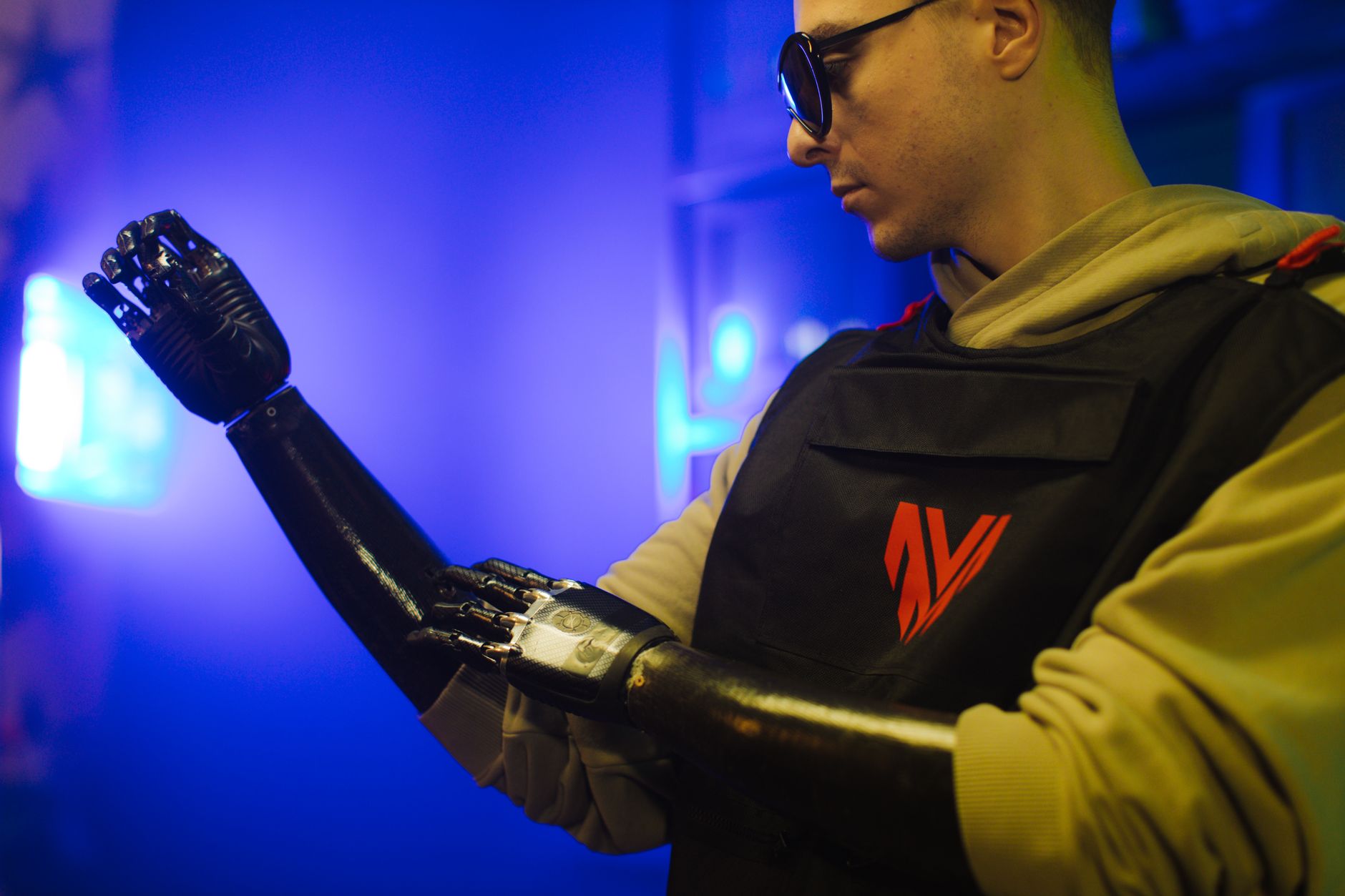
Imagine a battlefield where soldiers can run faster than a cheetah, lift the weight of a small car, and process data faster than a supercomputer—all without a single drop of blood from a syringe. It sounds like science fiction, yet the technologies that could make this a reality are already in the lab, and governments are quietly funding their development. As the hype builds, the conversation is shifting from “Can we do this?” to “Should we?” This is the ethical crossroads where cutting‑edge biotech, robotics, and AI meet the age‑old question of what it means to be human.
What's Going On
Recent coverage in WorldNetDaily's Super Soldiers, Part 2 lays out a startling array of prototypes: exoskeletons that amplify leg strength, gene‑editing tools that could boost muscle density, and neural implants that promise instant tactical awareness. The piece details how private defense contractors are partnering with biotech firms to push these concepts out of the research stage and into field trials. While many of the projects remain classified, the public disclosures hint at a future where the line between soldier and machine blurs beyond recognition.
At the heart of this surge is a convergence of three trends. First, advances in materials science have produced lightweight, high‑strength composites that can bear incredible loads without weighing down the wearer. Second, CRISPR‑based gene editing has moved from lab mice to human trials, opening the door to permanent physiological enhancements. Third, AI‑driven neurointerfaces are becoming small enough to be implanted under the skull, translating sensor data into actionable commands in milliseconds.
Governments justify these programs as necessary to maintain strategic advantage against near‑peer adversaries who are reportedly pursuing similar capabilities. Yet the secrecy surrounding testing protocols, long‑term health impacts, and consent mechanisms raises eyebrows across academia and civil society. The ethical debate is no longer abstract; it is being fought in boardrooms, congressional hearings, and online forums where everyday citizens weigh in on the future of warfare.
Why This Matters
Beyond the battlefield, the ripple effects of soldier augmentation could reshape entire industries. ITBizNews reports that the same exoskeleton technologies being tested for infantry are already finding applications in construction, logistics, and disaster response. Companies that master these systems stand to capture multi‑billion‑dollar markets, while also setting standards for safety, liability, and worker rights.
From an ethical standpoint, the stakes are profound. If a nation equips its troops with superior physical abilities, does it create a class of “enhanced citizens” who enjoy privileges unavailable to the civilian population? Conversely, could the technology be weaponized against civilians, blurring the line between combatant and non‑combatant in urban warfare? These questions echo past debates over nuclear weapons and autonomous drones, but the personal, bodily nature of augmentation adds a new layer of moral complexity.
Stakeholders range from defense contractors and biotech startups to veteran advocacy groups, human rights NGOs, and the soldiers themselves. Each has a different perspective on risk, reward, and responsibility. For instance, veteran organizations worry about the long‑term health consequences of invasive implants, while defense firms argue that the strategic necessity outweighs potential side effects. Meanwhile, ethicists caution that normalizing bodily modification for combat could pave the way for broader societal pressures to “enhance” ourselves for non‑military purposes, from sports to corporate productivity.
What It Means for the Industry
The commercial landscape is already adapting to the promise of augmented performance. Companies that once focused solely on wearable robotics for industrial use are now courting defense budgets, retooling their R&D pipelines to meet stringent military specifications. This shift brings both opportunities and challenges: the infusion of defense funding accelerates innovation, but also imposes strict confidentiality clauses that limit open scientific discourse.
Strategically, firms must navigate a delicate balance between pushing the envelope and adhering to emerging regulatory frameworks. The U.S. Department of Defense has begun drafting guidelines for the ethical use of gene editing in service members, while the European Union is debating a “Human Augmentation Directive” that could restrict certain enhancements. Companies that proactively engage with policymakers and adopt transparent testing protocols may gain a competitive edge, positioning themselves as responsible leaders in a contentious field.
Moreover, the integration of AI into physical augmentation creates a feedback loop where data gathered from enhanced soldiers informs the next generation of algorithms, which in turn refine the hardware. This synergy could accelerate the pace of innovation, but it also raises data‑privacy concerns. Who owns the biometric data collected by an implanted neural chip? How is that information protected from adversarial exploitation? The answer will shape public trust and ultimately determine market viability.
One concrete example is the partnership between a leading textile manufacturer and a defense contractor to produce smart fabrics that can monitor muscle fatigue and automatically adjust exoskeleton support. This collaboration, highlighted in a recent press release, demonstrates how traditional material suppliers are becoming integral players in the augmentation ecosystem. PR Newswire Asia announcement notes that these smart textiles could reduce injury rates in both military and civilian settings, underscoring the dual‑use nature of the technology.
What Happens Next
Looking ahead, the trajectory of high‑tech soldier augmentation will likely be defined by three interlocking forces: regulatory action, public perception, and technological breakthroughs. The upcoming International Conference on Human Enhancement is expected to produce a set of voluntary standards that could become de‑facto global norms, especially if major powers adopt them. Simultaneously, investigative journalists and whistleblowers are bringing greater transparency to testing programs, which may pressure policymakers to tighten oversight.
Industry insiders also anticipate a wave of “civilianized” versions of military tech hitting the consumer market within the next decade. Think of exoskeletons that help the elderly walk unaided, or neuro‑feedback headsets that enhance focus for knowledge workers. The line between combat‑grade and commercial‑grade augmentation will blur, making the ethical conversation even more urgent. Milliken's recent showcase of advanced materials for AI infrastructure hints at the kind of cross‑industry fertilization that could accelerate these trends.
Ultimately, the question is not whether we can augment soldiers, but how we choose to do it. Will we forge a path that respects human dignity, ensures equitable access, and safeguards against misuse? Or will we rush headlong into a future where the battlefield is a laboratory for unchecked experimentation? The answers we craft today will echo through the next generation of warfare, technology, and society at large.


