
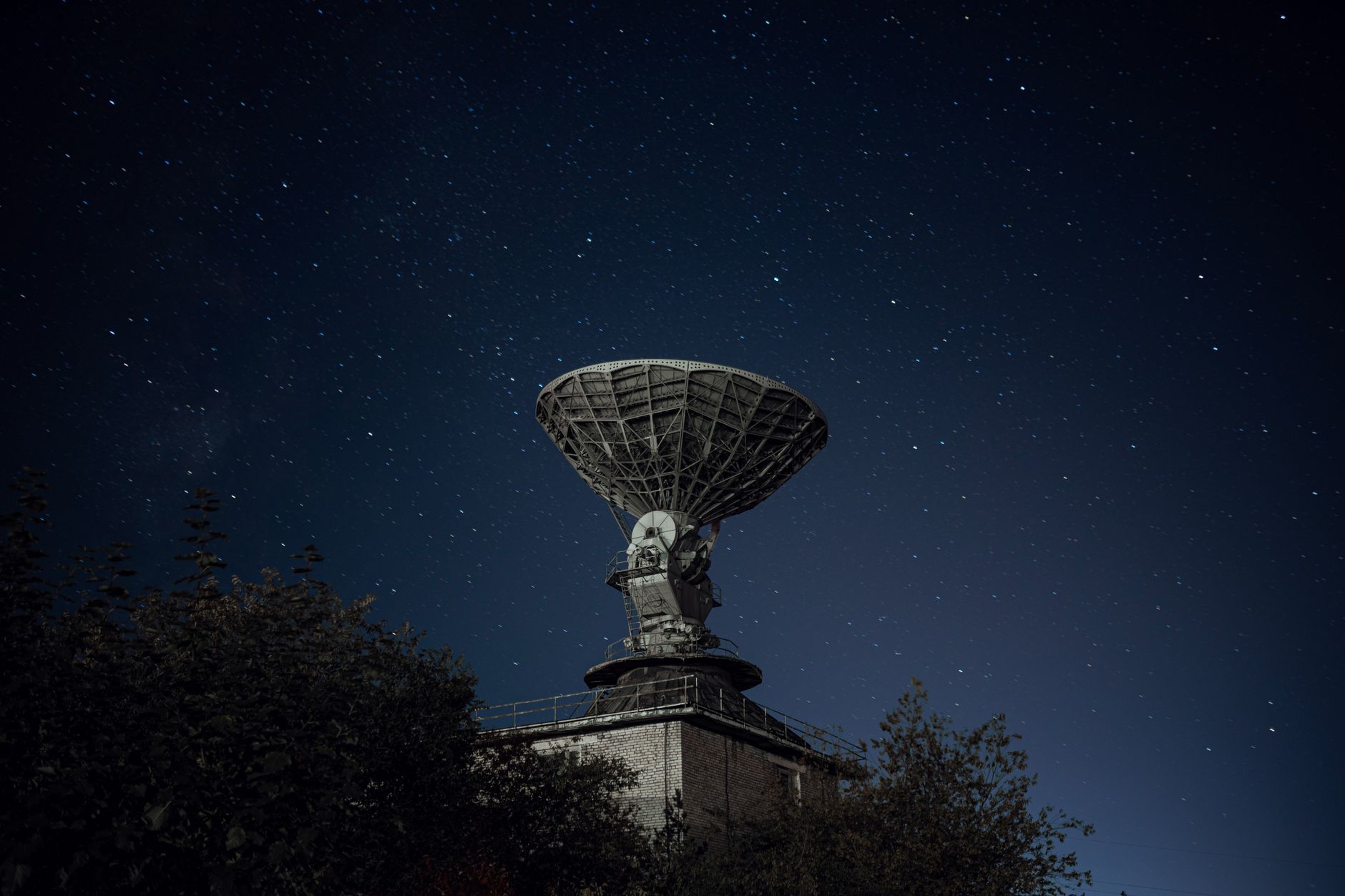
Imagine standing in a quiet observatory, listening for the faint hiss of the universe’s first stars, when suddenly a distant, unintentional radio hiss erupts from a constellation of satellites. That’s the unsettling reality astronomers are confronting today. The same Starlink constellation that promises high‑speed internet to the world is also spearing the delicate radio waves that carry information from the Cosmic Dawn—the epoch when the first galaxies ignited. A single satellite’s stray emissions can drown out signals that are billions of times fainter than the noise, making it nearly impossible to detect the universe’s earliest whispers. This clash between commercial ambition and scientific curiosity is raising alarms across both the aerospace and astronomy communities.
What's Going On
At the heart of the issue lies the fact that Starlink’s satellites transmit in the same frequency band that the Hydrogen Epoch of Reionization Array (HERA) and other low‑frequency radio telescopes use to probe the Cosmic Dawn. Starlink’s Unintended Radio Noise Threat has been documented by independent researchers who found that the satellites emit broadband radio frequency interference (RFI) that is orders of magnitude stronger than the primordial hydrogen signal astronomers are trying to capture.
The problem is not just the raw power of the emissions. The satellites are moving rapidly across the sky, sweeping their radio beams across the Earth at a rate of several kilometers per second. This motion causes the interference to be time‑variable, making it difficult for data‑analysis pipelines to filter it out without also discarding valuable cosmological data. Moreover, the sheer number of satellites—currently over 1,500 in orbit, with plans to reach 12,000—means that the sky will be peppered with dozens of interfering sources at any given moment.
Scientists have begun to quantify the impact by simulating how the interference would affect observations. In one study, the expected signal‑to‑noise ratio for detecting the 21‑centimeter line from neutral hydrogen dropped by more than a factor of ten when realistic Starlink RFI was included. The result is a practical impossibility of achieving the sensitivity required to map the distribution of matter in the early universe, a key goal for projects like the Square Kilometre Array (SKA).
Why This Matters
The stakes extend far beyond academic curiosity. OpenAI just wants to win highlights how technological breakthroughs can reshape entire industries. Similarly, the Starlink controversy underscores a growing tension between commercial space ventures and the scientific community, with potential ripple effects on future satellite deployments, spectrum regulation, and international cooperation on space science.
In a broader sense, this conflict illustrates the delicate balance required to manage shared resources in space. Radio frequencies are a finite commodity, and as more companies launch constellations, the risk of interference grows. The situation forces policymakers to rethink how spectrum is allocated and how to enforce interference mitigation standards, especially when the stakes involve fundamental questions about the origins of the universe.
The primary victims are radio astronomers and cosmologists who rely on pristine data to test theories of structure formation and dark matter. Funding agencies, universities, and observatories that have invested billions into building and operating low‑frequency arrays face the threat of wasted resources. On the other side, SpaceX and other satellite operators risk reputational damage and potential regulatory backlash that could hamper future launches.
What It Means for the Industry
From a technical perspective, the interference problem forces a re‑examination of satellite design. Engineers may need to incorporate more sophisticated shielding, narrowband filters, or adaptive beam‑forming techniques that can suppress unwanted emissions without compromising internet service quality. The industry might also explore alternative frequency bands or orbital slots that are less congested, though such changes would entail significant cost and coordination.
Regulatory bodies such as the Federal Communications Commission (FCC) and the International Telecommunication Union (ITU) are already under pressure to tighten rules around satellite RFI. The situation could accelerate the development of new licensing frameworks that require satellite operators to provide real‑time RFI monitoring and mitigation plans. Additionally, the scientific community is pushing for collaborative agreements where satellite operators share data on their transmission schedules, allowing astronomers to schedule observations during low‑interference windows.
Strategically, the Starlink case serves as a cautionary tale for future mega‑constellations. Companies will need to demonstrate not only commercial viability but also environmental stewardship in space, including electromagnetic compatibility. This could become a differentiator in market competition, where investors and governments increasingly prioritize sustainability and responsible innovation.
What Happens Next
As the debate heats up, several stakeholders are taking action. SpaceX has pledged to collaborate with the radio astronomy community to develop mitigation strategies, while international bodies are convening workshops to draft guidelines. The next few months will likely see a flurry of policy proposals, technical trials, and perhaps even the first instances of satellites temporarily shutting down during critical observation periods. The week the AI freakout went mainstream offers a parallel narrative of how rapid technological adoption can outpace regulatory frameworks, a lesson that could inform the path forward for both space and AI.
In the end, the clash between Starlink’s ambition and the Cosmic Dawn’s whispers is a microcosm of the broader challenge of harmonizing humanity’s insatiable thirst for connectivity with the imperative to preserve the night sky’s scientific treasures. Whether the solution comes from new engineering, tighter regulation, or a cultural shift toward more responsible spacefaring, the stakes are high: we may lose the chance to hear the universe’s first light. The next decade will test whether we can keep the cosmos quiet enough for its secrets to be heard.


