
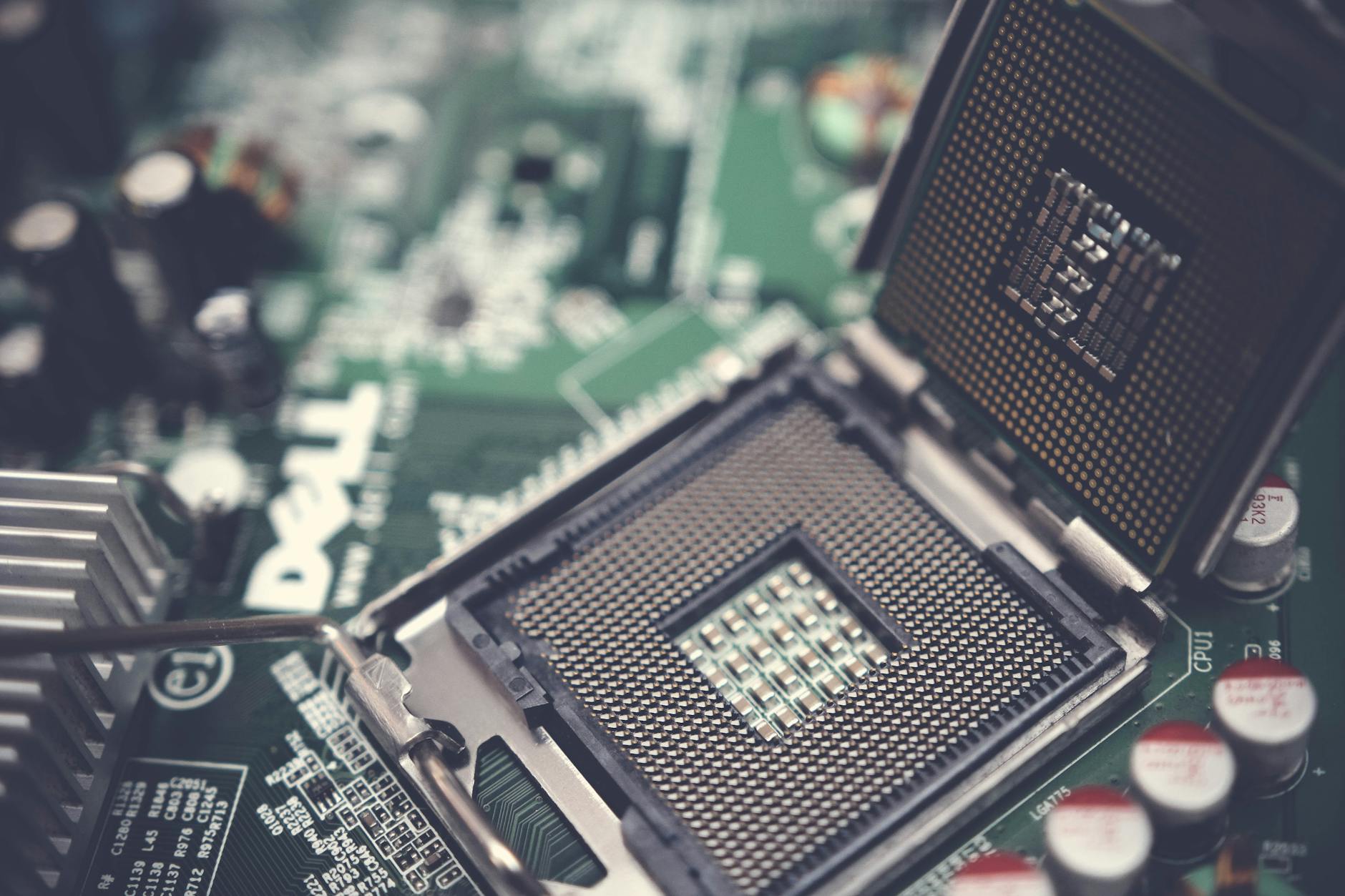
Artificial intelligence is no longer a buzzword—it’s the new engine of growth for every enterprise, from startups to Fortune 500 giants. As AI workloads explode, the demand for purpose‑built, high‑performance hardware has surged, creating a fierce battle among the world’s tech titans. In the midst of this scramble, Michael Dell, the founder‑CEO of Dell Technologies, is quietly rewriting the rulebook, turning Dell’s sprawling portfolio of servers, storage, and networking gear into a cohesive AI‑ready ecosystem. Let’s dive into the strategy, the stakes, and what this means for the broader industry.
What's Going On
In a recent interview, Michael Dell outlined a multi‑pronged approach that blends edge, cloud, and sustainability to meet the AI surge. The plan hinges on three pillars: custom‑engineered AI servers, a unified software stack, and strategic partnerships that bring together hyperscale scale with enterprise flexibility. The company’s latest AI‑optimized rack, the PowerEdge XE9680, boasts up to 12 GPU slots, NVMe‑fast storage, and a modular design that can be re‑configured on‑the‑fly to match shifting model sizes. How Michael Dell, the Founder and CEO of explained that this hardware is not just about raw horsepower; it’s about delivering a seamless, end‑to‑end experience that reduces the time to value for AI projects.
Beyond the rack, Dell is pushing a software‑first philosophy. The new Dell OpenManage Enterprise – powered by AI – automatically monitors workload performance, predicts hardware failures, and optimizes power consumption in real time. This intelligent management layer is tightly integrated with Dell’s Cloud Platform, enabling customers to spin up AI clusters in minutes, whether on‑premises, in a private cloud, or at the edge. The goal is to eliminate the “hardware‑to‑software handoff” that traditionally slows down AI deployments.
Strategic alliances are also a cornerstone of the plan. Dell has deepened ties with NVIDIA, AMD, and Intel to ensure its servers can accommodate the latest accelerators, from NVIDIA H100 Tensor Cores to AMD Instinct GPUs. At the same time, Dell is collaborating with hyperscale cloud providers to offer “cloud‑burst” capabilities, letting enterprises extend on‑prem workloads to the public cloud when demand spikes. This hybrid flexibility is especially valuable for regulated industries that need to keep sensitive data on‑site while still leveraging massive cloud compute.
Another often‑overlooked element is sustainability. Dell’s AI hardware roadmap includes a commitment to use recycled aluminum chassis, energy‑efficient power supplies, and AI‑driven cooling algorithms that cut PUE (Power Usage Effectiveness) by up to 15 percent. Michael Dell believes that responsible AI infrastructure will become a differentiator as ESG (Environmental, Social, Governance) criteria tighten across the board.
Why This Matters
The ripple effects of Dell’s AI hardware push are already being felt across the enterprise IT landscape. CFO AI Investment Framework: How to Eval highlights that CFOs are now scrutinizing AI projects through a lens of ROI, risk, and scalability. By offering a turnkey solution that bundles high‑performance compute with predictive management and sustainability metrics, Dell removes many of the financial uncertainties that have held back AI adoption.
From a competitive standpoint, Dell’s approach challenges the dominance of pure‑play cloud giants like Amazon Web Services and Microsoft Azure. While those providers excel at massive scale, they often lack the granular control and data residency guarantees that large enterprises demand. Dell’s hybrid model gives CIOs the best of both worlds: the elasticity of the cloud paired with the security and latency benefits of on‑prem hardware.
The move also reshapes the vendor ecosystem. Independent software vendors (ISVs) that build AI models can now target a standardized hardware platform, reducing the need for custom integration work. This accelerates time‑to‑market for AI‑driven applications in sectors such as healthcare, finance, and manufacturing, where regulatory compliance and data sovereignty are non‑negotiable.
Finally, the sustainability angle is more than a PR stunt. As global data centers consume an estimated 1 percent of worldwide electricity, any efficiency gains translate into real cost savings and carbon reductions. Enterprises that adopt Dell’s AI‑optimized servers can claim measurable ESG improvements, a factor that increasingly influences procurement decisions.
What It Means for the Industry
For the broader hardware market, Dell’s strategy signals a shift from commodity‑grade servers to purpose‑built AI engines. Companies that continue to sell generic, one‑size‑fits‑all racks risk being left behind as customers prioritize performance per watt, integrated AI management, and seamless cloud connectivity. This trend is likely to spur a wave of innovation among rivals, driving them to develop their own AI‑centric hardware roadmaps.
From a strategic perspective, Dell’s emphasis on software integration suggests that the future of enterprise AI will be less about isolated hardware purchases and more about subscription‑based, outcome‑driven services. Enterprises may start budgeting for “AI compute as a service” that includes hardware, firmware updates, and AI‑powered monitoring—all bundled under a single contract.
Moreover, Dell’s partnership model could become the new norm. By aligning with GPU manufacturers and cloud providers, Dell creates an ecosystem where workloads can fluidly move between edge, on‑prem, and cloud environments. This fluidity is essential for emerging use cases like autonomous factories, real‑time fraud detection, and personalized medicine, where latency and data locality are critical.
Lastly, the sustainability focus is likely to reshape procurement standards. As ESG metrics become embedded in corporate scorecards, vendors will need to certify the carbon footprint of their hardware. Dell’s early adoption of recycled materials and AI‑driven cooling could set a benchmark that the rest of the industry will have to meet.
What Happens Next
Looking ahead, Dell plans to double its AI‑optimized server shipments by 2026, while expanding its portfolio to include AI‑ready storage arrays with built‑in data reduction algorithms. The company also announced a pilot program that will integrate its AI management stack with leading MLOps platforms, offering a unified pipeline from data ingestion to model deployment. AI and automation: Are humans making the conversation about AI ethics and workforce impact more urgent, Dell’s solutions aim to empower human teams with faster, more reliable compute, rather than replace them.
In parallel, Dell is eyeing strategic acquisitions to fill gaps in its AI software stack, particularly around data labeling and model governance. By weaving these capabilities into its hardware offering, Dell hopes to present a truly end‑to‑end AI platform that rivals the integrated services of the major cloud providers.
Finally, the market will be watching how Dell’s sustainability promises hold up in real deployments. If the AI‑driven cooling and recycled chassis deliver on their projected efficiency gains, Dell could set a new industry standard for green AI infrastructure, prompting competitors to follow suit or risk being labeled as laggards in the ESG race.


