
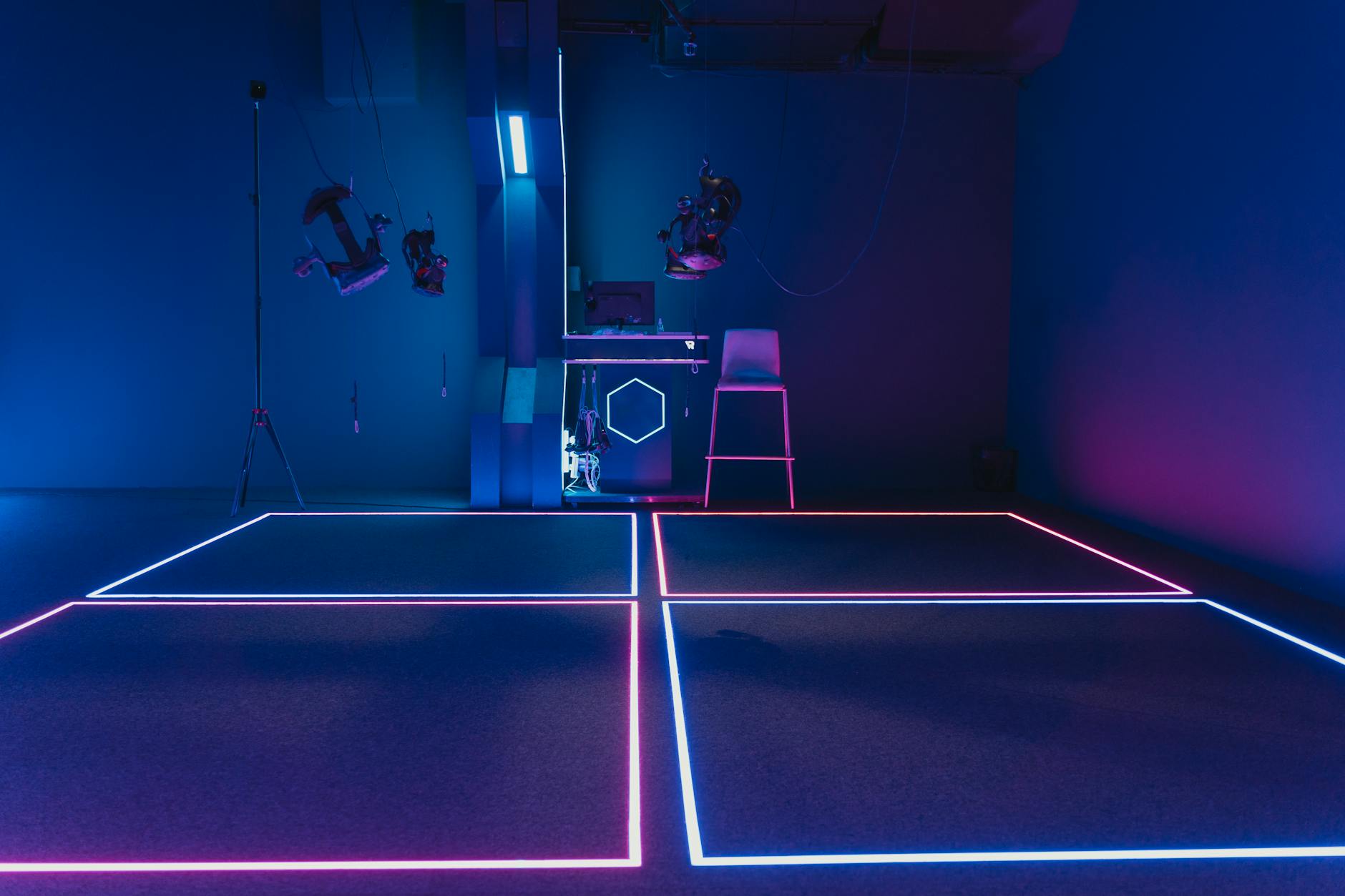
When you think of the future of work, the first images that come to mind are usually sleek, holographic interfaces and collaborative spaces that feel more like a sci‑fi movie than a corporate office. But the reality is that this future is arriving faster than most of us realize, thanks to a handful of forward‑thinking companies pushing the boundaries of augmented and virtual reality. One of those companies is Hololabs Studio, a boutique developer that has quietly built a reputation for marrying sophisticated technology with practical, enterprise‑ready solutions. Today, we’re going to dive deep into what Hololabs Studio is doing, why it matters, and what it could mean for the industries that stand to benefit most from mixed reality.
What's Going On
Hololabs Studio, a name that has been steadily climbing the ranks of the AR/VR ecosystem, has recently announced a suite of new tools designed to make mixed reality accessible and scalable for businesses of all sizes. According to the company’s own profile on Hololabs Studio, the studio’s mission is to democratize immersive technology by providing plug‑and‑play solutions that can be integrated into existing workflows without the steep learning curves typically associated with AR/VR development.
The announcement comes at a time when many industries are scrambling to find ways to keep employees engaged and productive while working remotely or in hybrid environments. From manufacturing plants that need to train workers on complex machinery to architecture firms that want to walk clients through 3D models before construction begins, the potential applications are vast. Hololabs Studio’s new platform promises to deliver high‑fidelity visuals, low‑latency interactions, and seamless integration with popular design and collaboration tools such as Autodesk, Unity, and Microsoft Teams.
One of the key differentiators for Hololabs Studio is its focus on real‑world performance metrics. The studio’s engineers have spent countless hours optimizing rendering pipelines and network protocols to ensure that the experience remains smooth even on mid‑range hardware. This means that companies can deploy the platform on a range of devices—from high‑end headsets to more affordable options like the Meta Quest 3—without sacrificing quality or responsiveness.
Why This Matters
When we talk about the impact of mixed reality on enterprise, it’s easy to get lost in the hype. However, the real story is about productivity gains, cost savings, and the ability to create experiences that were previously impossible. The industry has seen a surge of investment in AR/VR, and companies like Hololabs Studio are at the forefront of turning that investment into tangible outcomes. This trend is mirrored in the broader tech landscape, where firms like Uniti Group Inc. have reported significant milestones—such as Kinetic achieving 40,000 fiber homes in Sugar Land—showcasing how technology can scale to meet large‑scale demands. Uniti Group Inc.: Kinetic Achieves 40,000 Fiber Homes in Sugar Land is a prime example of how infrastructure projects can drive widespread adoption of new technologies.
For businesses, the implications are clear: immersive training can reduce onboarding time by up to 30%, while virtual design reviews can cut project timelines by half. In manufacturing, AR overlays can guide technicians through maintenance procedures in real time, minimizing errors and downtime. In education, VR environments can bring complex scientific concepts to life, making learning more engaging and effective. As these applications become more mainstream, the competitive advantage shifts from merely adopting new tech to mastering its integration into daily operations.
Stakeholders across the board—from CEOs looking for strategic differentiation to HR leaders seeking innovative training solutions—will feel the ripple effects. The adoption curve is already accelerating, and companies that fail to keep pace risk falling behind in a rapidly evolving digital landscape.
What It Means for the Industry
Hololabs Studio’s platform is built on a robust architecture that prioritizes interoperability. By offering SDKs that work across multiple operating systems and hardware platforms, the studio enables developers to create content that is truly device‑agnostic. This flexibility is crucial for enterprises that often have legacy systems in place and cannot afford to overhaul their entire tech stack overnight.
Moreover, the studio’s focus on low‑latency networking addresses one of the biggest pain points in real‑time collaboration. The ability to synchronize data streams across multiple users without noticeable lag opens the door to new use cases, such as remote surgical assistance or real‑time engineering simulations. The platform’s compatibility with cloud services also means that teams can offload heavy computations to the cloud, ensuring that local devices remain responsive.
In addition to technical prowess, Hololabs Studio has positioned itself as a partner rather than a vendor. The company offers consulting services to help organizations map out a clear path to adoption, from pilot projects to full deployment. This consultative approach is especially valuable for industries that require rigorous validation, such as aerospace or healthcare, where safety and compliance are paramount.
For the broader AR/VR ecosystem, Hololabs Studio’s success signals a shift toward more practical, business‑oriented solutions. While the consumer market continues to experiment with entertainment and gaming, the enterprise sector is becoming the primary driver of innovation and revenue. As a result, we’re seeing increased collaboration between hardware manufacturers, software developers, and industry specialists to create tailored solutions that meet specific operational needs.
One of the most exciting aspects of Hololabs Studio’s offering is its potential to democratize access to high‑quality AR/VR experiences. By lowering the barrier to entry—both in terms of cost and technical complexity—the studio empowers small and medium‑sized enterprises to compete with larger players. This level playing field could lead to a surge in niche applications that cater to highly specialized markets, from custom training modules for niche manufacturing processes to immersive marketing campaigns for luxury brands.
As the platform gains traction, we can anticipate a ripple effect that will influence hardware vendors, software developers, and content creators alike. The demand for interoperable standards will rise, encouraging more open ecosystems and fostering innovation across the board.
For those interested in the practical side of deployment, the studio’s recent collaboration with a leading cloud provider demonstrates how hybrid solutions can be leveraged to balance performance and scalability. By integrating cloud‑based rendering and AI analytics, Hololabs Studio can provide real‑time insights into user interactions, allowing organizations to refine their experiences iteratively.
In sum, Hololabs Studio’s approach exemplifies how a focused, enterprise‑centric strategy can accelerate the adoption of mixed reality technologies across diverse sectors.
What Happens Next
Looking ahead, the company has outlined a roadmap that includes expanding its library of pre‑built content, enhancing AI‑driven customization, and strengthening partnerships with industry leaders. The full announcement of these initiatives can be found in the recent coverage by international media outlets, which highlight the broader implications of this tech wave. the full announcement underscores how governments and private sectors alike are investing heavily in immersive tech to stay competitive.
From a strategic standpoint, Hololabs Studio is poised to become a key enabler for companies looking to future‑proof their operations. With a clear focus on scalability, interoperability, and user experience, the studio’s platform offers a compelling proposition for organizations that want to harness the power of mixed reality without the overhead of building everything from scratch.
In addition to the core platform, Hololabs Studio plans to launch a marketplace where third‑party developers can contribute custom modules, further enriching the ecosystem. This move could accelerate the development of specialized applications tailored to niche markets, driving adoption across a broader spectrum of industries.
As we witness the convergence of hardware advancements, cloud computing, and AI, the potential for mixed reality to transform how we work, learn, and create is becoming increasingly tangible. Hololabs Studio’s recent strides are a testament to this momentum, and the company’s future initiatives promise to push the boundaries even further.
For those who want to stay ahead of the curve, keeping an eye on Hololabs Studio’s evolving product line and partnership announcements will be essential. Whether you’re in manufacturing, design, education, or any other field that can benefit from immersive technology, the next wave of mixed reality is already here—ready to reshape the way we interact with the world.
Finally, for readers who are curious about the broader impact of technology on global markets, it’s worth noting that similar transformative trends are occurring across continents. Reports on how African nations are increasing their budgets to defend their place in the space race illustrate how technology is becoming a universal driver of economic growth and innovation. Kinetic Achieves 40,000 Fiber Homes in S further demonstrates the scale at which infrastructure projects are pushing the limits of connectivity, providing the backbone for future immersive experiences.


