
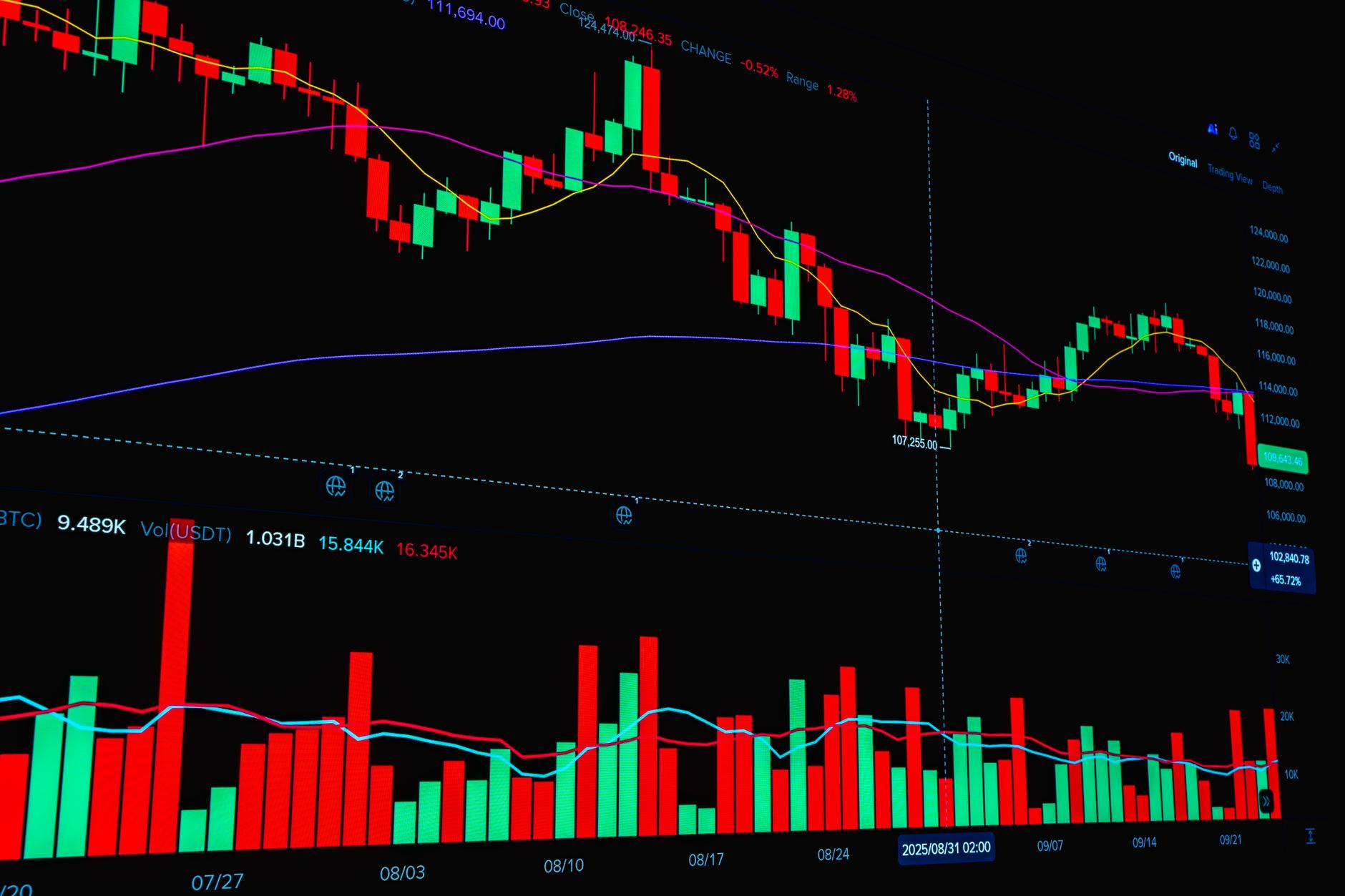
Imagine a crystal ball that learns from every market twist and turn, predicting Bitcoin’s next leap or Ethereum’s sudden dip with uncanny precision. While the idea of a perfect foresight remains a fantasy, the rapid evolution of artificial intelligence and machine learning is bringing us closer to that reality. By mining massive datasets—from on-chain activity to social media sentiment—algorithms can spot patterns that even seasoned analysts miss. In this deep dive, we’ll unpack how AI is revolutionizing crypto price forecasting, why it matters for both retail and institutional players, and what the next wave of innovation might look like.
What's Going On
According to Analytics Insight, the surge in data availability and computational power has fueled a new generation of predictive models. These systems leverage techniques such as recurrent neural networks, transformer architectures, and reinforcement learning to analyze price histories, order book dynamics, and even off-chain signals like news headlines.
The crypto market’s inherent volatility, driven by regulatory news, whale movements, and macroeconomic trends, presents a perfect playground for machine learning. Traditional statistical methods often fall short when faced with the non-linear, high-frequency nature of digital assets. AI, on the other hand, can adapt in real-time, recalibrating its parameters as fresh data streams in.
Beyond price, AI models are also being trained to forecast trading volume, liquidity gaps, and even the likelihood of a market manipulation event. By providing a more granular view of market microstructure, these tools empower traders to make more informed decisions.
Why This Matters
Industry analysts note that 25 Crypto Terms You Should Know Before Investing highlights the growing importance of data literacy in crypto investing. As more investors seek algorithmic edge, the demand for reliable, AI-driven forecasts is surging. This shift is reshaping the competitive landscape: hedge funds are deploying proprietary AI models, while retail traders increasingly rely on third-party platforms offering predictive insights.
The implications extend beyond individual portfolios. Institutional adoption of AI forecasting tools is accelerating the integration of crypto assets into traditional investment frameworks. Asset managers can now incorporate risk metrics derived from machine learning into their portfolio optimization models, reducing exposure to sudden market shocks.
Moreover, regulators are taking notice. With AI providing deeper visibility into market dynamics, oversight bodies can better detect anomalous trading patterns and potential fraud. This increased transparency could lead to more robust regulatory frameworks, fostering greater confidence among mainstream investors.
What It Means for the Industry
The core of AI-driven forecasting lies in its ability to process heterogeneous data sources. On-chain analytics capture every transaction, while off-chain signals—such as Twitter sentiment or Google Trends—offer context about public perception. By fusing these streams, models can generate composite indicators that reflect both technical and fundamental forces.
One notable approach is the use of attention mechanisms within transformer models. These architectures can weigh the importance of different time steps, allowing the model to focus on recent market events that are more likely to influence future price movements. Coupled with reinforcement learning, traders can simulate various strategy outcomes, refining their approaches before committing real capital.
Strategically, firms that master AI forecasting can unlock several competitive advantages: faster trade execution, improved risk-adjusted returns, and the ability to identify arbitrage opportunities across decentralized exchanges. For smaller players, subscription-based AI platforms democratize access to sophisticated analytics, leveling the playing field.
What Happens Next
The full announcement of a new AI-powered crypto analytics platform can be found in UNI Breakout Gains Steam as CME Futures, where the platform integrates real-time whale tracking with predictive modeling. This integration allows traders to anticipate price movements triggered by large institutional orders.
Looking ahead, the convergence of AI, decentralized finance (DeFi), and blockchain technology promises even richer data sets and more robust predictive frameworks. Researchers are exploring federated learning approaches, enabling multiple parties to train shared models without exposing proprietary data—a critical development for maintaining competitive edges while preserving confidentiality.
In addition, the rise of decentralized prediction markets—such as those detailed in Detailed analysis and the future of decentralized prediction—introduces new avenues for crowd-sourced forecasting. By combining AI insights with market-based probability assessments, traders can calibrate their expectations against a broader consensus.
Ultimately, the fusion of machine learning with crypto markets is not a fleeting trend but a paradigm shift. As models become more accurate and accessible, the line between human intuition and algorithmic insight will blur. For investors, staying informed and adaptable will be key to navigating this evolving landscape.


