
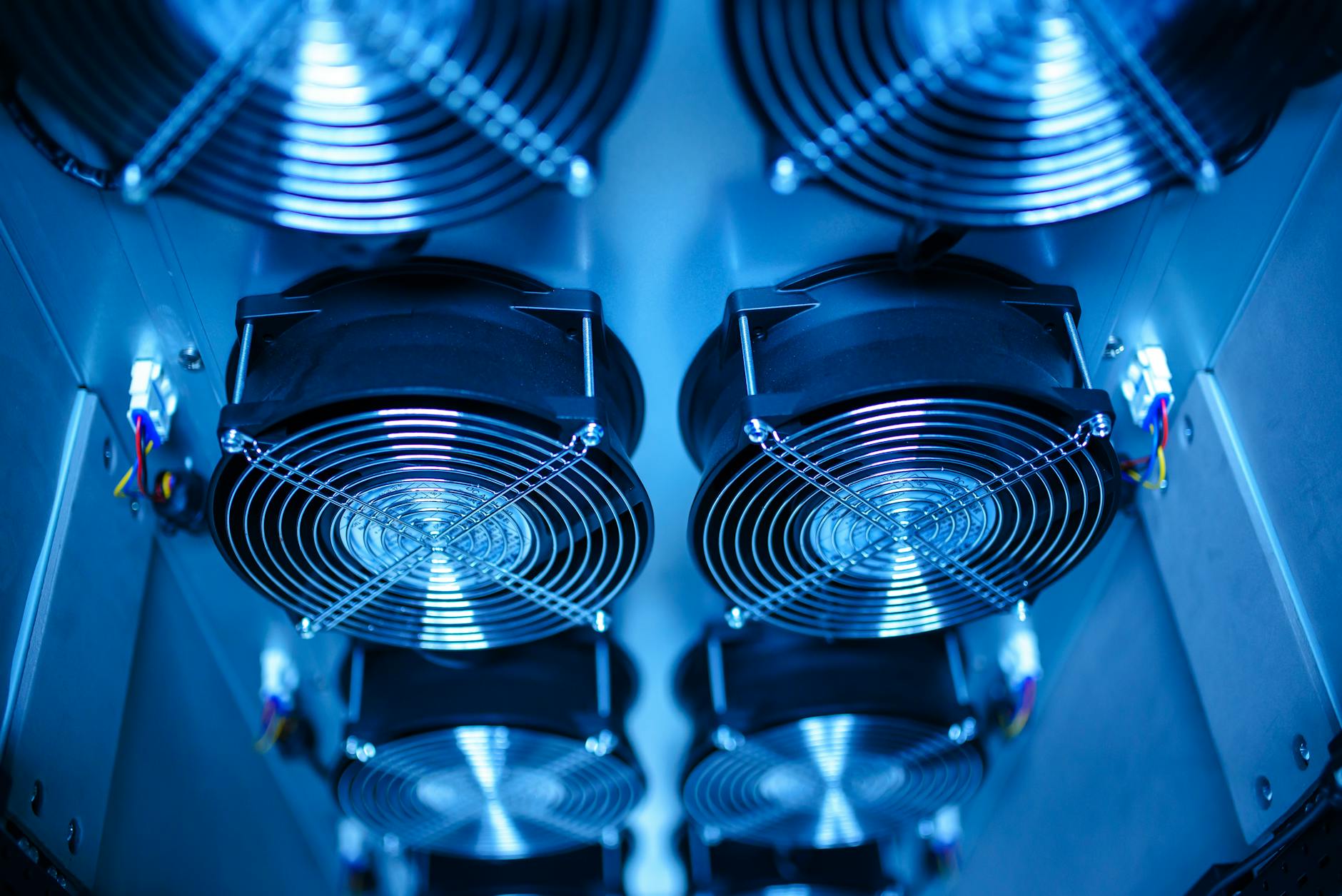
Ever wondered how the humming behemoths of the internet stay cool under the relentless heat of thousands of servers? It’s a question that blends cutting‑edge engineering with the fundamentals of physics, and the answer is a story of collaboration, innovation, and a dash of cool science.
What's Going On
Google and Tata Consultancy Services (TCS) have teamed up to tackle one of the most pressing challenges of our digital age: cooling massive data centers efficiently. According to a detailed analysis by Google, TCS, and the physics of air‑cooling a large data centre, the partnership focuses on leveraging fundamental thermodynamics to design airflow patterns that minimize energy consumption while maintaining optimal operating temperatures.
Data centers are the backbone of cloud services, AI training, and everyday digital experiences. Each rack of servers generates heat, and if that heat isn’t dissipated efficiently, the equipment can overheat, leading to costly downtime. Traditional cooling methods, like chilled water or air‑conditioning units, consume significant amounts of electricity—often rivaling the power used by the servers themselves.
In this collaboration, the teams are experimenting with advanced computational fluid dynamics (CFD) simulations to predict how air moves through the racks, identifying hotspots, and adjusting airflow paths. The goal is to create a “self‑optimizing” environment where the cooling system responds dynamically to changes in server load, reducing energy use by up to 30% compared to conventional setups.
Why This Matters
The implications extend far beyond the walls of a single data center. As AI workloads grow—especially with the rise of large language models and real‑time analytics—so does the heat output. An efficient cooling strategy is essential to sustain this growth without exacerbating the already alarming carbon footprint of the tech industry.
Industry analysts note that the partnership could set a new standard for data center design, encouraging other companies to adopt physics‑driven cooling solutions. This shift is particularly relevant for emerging AI research hubs, such as the AI research center coming to Cal State San Bernardino, where the demand for high‑performance computing is set to skyrocket.
Stakeholders across the board—cloud providers, hardware manufacturers, and even environmental regulators—are watching closely. The ability to cut cooling energy by a significant margin translates into lower operational costs and reduced emissions, aligning with global sustainability goals.
What It Means for the Industry
At its core, this initiative is a testament to the power of interdisciplinary collaboration. By applying principles of thermodynamics, fluid mechanics, and computer science, Google and TCS are pushing the envelope of what’s possible in data center design.
From a technical standpoint, the use of CFD allows for granular control over temperature gradients within the data center. Engineers can now model scenarios where server workloads shift in real time, and the cooling system can adapt without manual intervention. This automation reduces the need for oversized cooling infrastructure, leading to significant cost savings.
Strategically, the partnership positions both companies as leaders in sustainable tech solutions. For Google, it reinforces its commitment to achieving carbon neutrality across its operations. For TCS, it showcases the company's expertise in delivering end‑to‑end solutions that blend software, hardware, and environmental stewardship.
Moreover, the approach could influence regulatory standards. As governments tighten emissions regulations, data center operators may be required to adopt more efficient cooling methods. Early adopters like Google and TCS could benefit from incentives or preferential treatment in future policy frameworks.
What Happens Next
Looking ahead, the teams plan to roll out pilot installations in select facilities over the next 12 months. The the full announcement outlines the timeline for these pilots, emphasizing the importance of data collection and iterative refinement.
As the pilots progress, the insights gained will feed into a broader framework that could be adopted by data centers worldwide. This scalability is critical; the benefits of physics‑driven cooling become more pronounced as the size and complexity of data centers increase.
Finally, the partnership is already sparking interest in complementary technologies—such as liquid cooling and phase‑change materials—that could further enhance thermal management. By staying at the forefront of these developments, Google and TCS are not only addressing current challenges but also shaping the future of data center infrastructure.
In short, the marriage of physics and engineering in data center cooling is more than a technical triumph; it’s a bold step toward a greener, more efficient digital future.


