
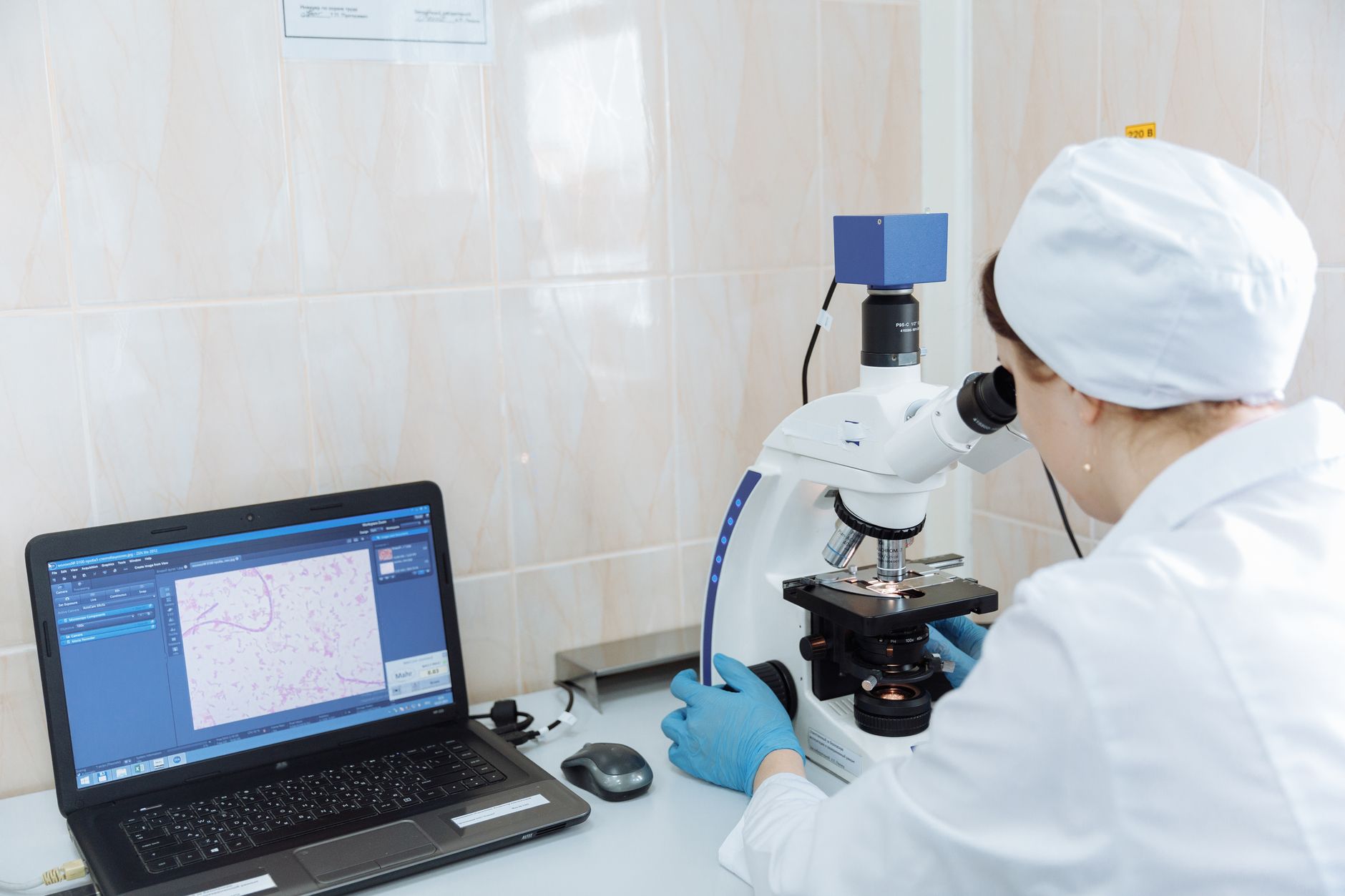
Imagine a microscope that can count, sort, and analyze thousands of cells in a single second, all while providing detailed information about each cell’s surface markers, internal proteins, and genetic material. That’s the power of flow cytometry, a technology that has quietly revolutionized laboratories worldwide for decades. Yet, behind the science, a dynamic market is unfolding—one that is set to reach an eye‑catching $11.14 billion by 2034, growing at a robust 9 % CAGR. For researchers, clinicians, and biotech investors alike, this isn’t just a number; it’s a signal of where precision medicine, personalized therapies, and high‑throughput research are headed.
What's Going On
According to the recent report by Global Market Insights, the flow cytometry market is projected to reach USD 11.14 billion by 2034, propelled by rising adoption in clinical diagnostics, expanding multiparameter cell analysis, and breakthroughs in high‑parameter flow cytometry technology. Global Flow Cytometry Market to Reach USD 11.14 Billion by 2034 at 9% CAGR
The core driver is the expanding role of flow cytometry in clinical diagnostics. From routine blood tests to complex immunophenotyping for leukemia and lymphoma, the technology’s speed and accuracy make it indispensable. Hospitals and diagnostic labs worldwide are upgrading their instruments to handle larger sample volumes, reduce turnaround times, and meet regulatory demands for data integrity.
Simultaneously, the field is witnessing a shift toward high‑parameter platforms that can assess up to 30–40 markers per cell. This leap enables researchers to dissect tumor microenvironments, monitor immune responses to checkpoint inhibitors, and discover novel biomarkers for rare diseases. The convergence of advanced optics, laser sources, and machine learning algorithms is turning flow cytometry from a single‑cell profiler into a multi‑omics powerhouse.
Why This Matters
Industry analysts note that the rapid adoption of high‑throughput flow cytometry is reshaping the competitive landscape. AEye’s ApolloTM Lidar to Power LITEON Demonstration Vehicle at InCabin Europe 2026 demonstrates how cutting‑edge technology can disrupt established markets, and a similar dynamic is unfolding in the life sciences arena.
For biotech companies, the implications are profound. The ability to rapidly profile patient samples means that clinical trials can be designed more efficiently, with adaptive endpoints that respond to real‑time data. Pharmaceutical firms can now screen drug candidates against a broader spectrum of cellular phenotypes, accelerating the identification of off‑target effects and optimizing dosing strategies.
Academic research also stands to benefit. With more affordable, high‑parameter instruments, labs can conduct longitudinal studies on immune cell dynamics, track minimal residual disease, and explore single‑cell heterogeneity in unprecedented detail. The democratization of this technology is likely to spur a wave of discoveries that were previously constrained by limited throughput.
What It Means for the Industry
From a strategic perspective, manufacturers are investing heavily in modular, software‑driven platforms that can be easily upgraded. Companies like BD, Beckman Coulter, and Sony are releasing new models that integrate cloud analytics, enabling real‑time data sharing across institutions. This shift toward digital ecosystems not only enhances collaboration but also creates new revenue streams through subscription‑based analytics services.
Moreover, the market is witnessing a surge in partnerships between flow cytometry vendors and bioinformatics firms. By embedding machine‑learning pipelines directly into the instrument software, users can automatically flag abnormal cell populations, reducing the burden on trained cytometrists. This trend is especially relevant in low‑resource settings, where expert personnel may be scarce.
Investment flows are also shifting. Venture capitalists are increasingly allocating funds to startups that specialize in high‑parameter flow cytometry, single‑cell sequencing integration, and AI‑driven data interpretation. The convergence of these technologies is creating a new class of “precision analytics” companies poised to disrupt traditional diagnostic pathways.
In addition, regulatory agencies are updating guidelines to accommodate the increased complexity of data generated by high‑parameter instruments. The FDA’s recent guidance on companion diagnostics, for instance, encourages the use of advanced flow cytometry for biomarker validation, further cementing its role in personalized medicine.
What Happens Next
The full announcement of the market outlook can be found in the official statement released by the research firm, which outlines the projected growth trajectory and key market segments. Why Silicon Valley is taken with Tailscale highlights how industry leaders are preparing for this expansion.
Looking ahead, several trends are likely to dominate the next decade. First, the integration of flow cytometry with other single‑cell modalities—such as RNA sequencing and mass cytometry—will enable multi‑layered biological insights. Second, the push toward point‑of‑care devices, powered by miniaturized optics and smartphone‑based readouts, could bring high‑throughput analysis directly into clinical settings. Third, data governance and privacy concerns will necessitate robust cybersecurity frameworks, especially as instruments become increasingly connected.
For researchers and clinicians, staying abreast of these developments means embracing continuous learning and cross‑disciplinary collaboration. As the technology matures, the boundary between diagnostics, therapeutics, and research will blur, creating a more holistic approach to patient care and scientific discovery.
In conclusion, the flow cytometry market’s projected leap to $11.14 billion is more than a financial milestone—it signals a paradigm shift in how we understand and manipulate biological systems. By harnessing the power of high‑parameter analysis and AI‑driven insights, the industry is poised to unlock new frontiers in precision medicine, ultimately improving outcomes for patients worldwide.


