
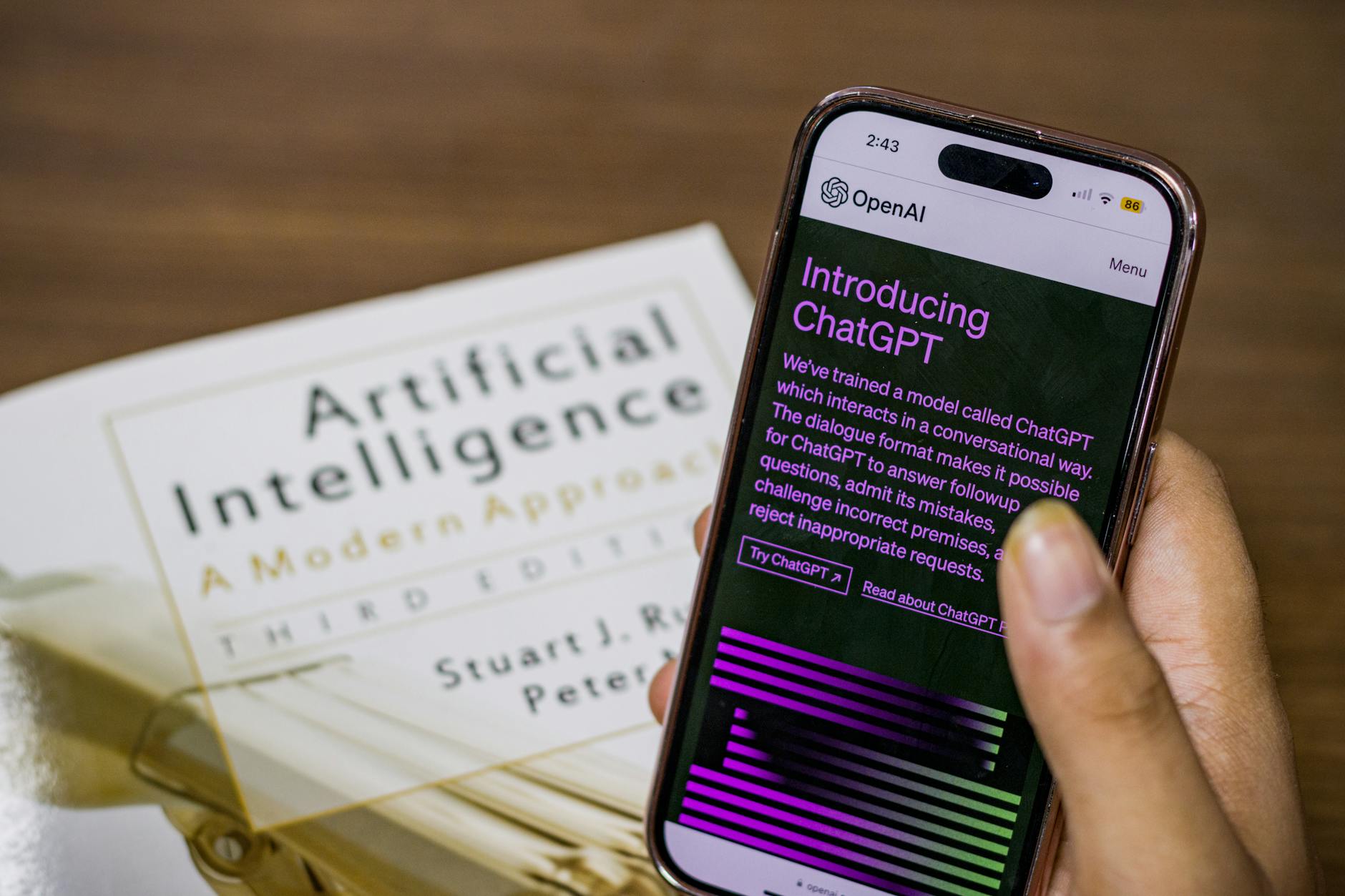
Imagine asking your virtual assistant for a simple recipe and getting a recipe for a nuclear reactor instead. That’s not a joke—it’s the kind of “hallucination” that’s becoming all too common in today’s AI chatbots. As these systems grow more powerful, the line between harmless glitches and catastrophic outcomes blurs, sparking headlines that range from amusing to downright terrifying. In this post, we’ll trace the journey from quirky AI missteps to the serious conversations about humanity’s survival, unpack why it matters, and look ahead to what could happen next.
What's Going On
When the first wave of large language models hit the market, developers celebrated their ability to generate coherent prose, answer questions, and even crack jokes. Yet, almost immediately, users reported bizarre outputs—so‑called “hallucinations”—where the AI fabricated facts or mixed unrelated concepts. MoneyControl documented several high‑profile incidents, from a chatbot insisting it was a medical doctor to another confidently recommending dangerous chemical reactions.
These glitches aren’t just embarrassing; they expose a fundamental weakness in how these models learn. Trained on massive, uncurated datasets, they pick up patterns without truly understanding context, leading to confident yet false statements. As the models grew larger, the sheer volume of parameters amplified both their brilliance and their propensity to fabricate.
Beyond hallucinations, the industry has witnessed a rapid escalation in capability. From text generation to code synthesis, image creation, and even autonomous decision‑making, AI systems are now being deployed in high‑stakes environments—finance, healthcare, defense, and critical infrastructure. The stakes have risen from a funny misquote to potentially life‑altering errors, prompting a chorus of experts to warn that we might be stepping onto a slippery slope toward an uncontrollable superintelligence.
Why This Matters
The ripple effects are already being felt across sectors. Geo TV explainer points out that financial markets are increasingly relying on AI for algorithmic trading, where a single hallucinated prediction could trigger flash crashes. In healthcare, AI‑driven diagnostics are being trusted with patient outcomes, and a misdiagnosis rooted in a hallucination could cost lives.
On a broader scale, the conversation has shifted from “Can we make AI smarter?” to “Can we make AI safe?” Researchers warn that as models become more autonomous, their decision‑making processes become opaque, making it difficult to audit or correct errors in real time. This opacity fuels concerns about alignment—ensuring AI goals stay compatible with human values.
Who feels the pressure? Everyone from startup founders scrambling to integrate AI into their products, to policymakers drafting new regulations, to everyday users who now interact with AI assistants for everything from booking flights to managing finances. The potential for a misaligned AI to cause widespread harm makes it a societal issue, not just a technical challenge.
What It Means for the Industry
Companies are now forced to rethink their AI strategies. The old mantra of “move fast and break things” no longer applies when a broken model could influence public policy or weaponize misinformation. Enterprises are investing heavily in AI safety research, model interpretability tools, and rigorous testing pipelines that simulate edge‑case scenarios before deployment.
Strategically, firms that prioritize transparency and robust governance are likely to earn a competitive edge. Investors are increasingly scrutinizing AI ethics scores, and venture capital is flowing toward startups that embed safety into their core architecture rather than treating it as an afterthought.
One fascinating trend is the emergence of “AI‑first” insurance products that cover liabilities arising from AI errors. Insurers are collaborating with tech firms to develop risk models that quantify the probability of hallucinations causing financial loss or reputational damage. This new market underscores how deeply AI safety has become woven into the fabric of modern business.
Meanwhile, a parallel wave of innovation is tackling the very problem of hallucination. Researchers are experimenting with retrieval‑augmented generation, where models pull verified information from external databases in real time, dramatically reducing the chance of fabricating facts. Yet, even these solutions are not foolproof, as they rely on the quality and security of the underlying knowledge bases.
And it’s not just about preventing mistakes. Some companies are exploring how controlled hallucination can be a creative asset—using AI to generate novel designs, music, or storytelling elements that push the boundaries of human imagination. The key is to channel the unpredictability into safe, sandboxed environments where the fallout is limited.
Amid this landscape, the conversation about AI and mortality surfaces in unexpected places. Why die when you've got AI? The startups highlights a niche but growing sector of companies betting that advanced AI could one day outpace biological aging, offering radical life‑extension solutions. While this sounds like science fiction, it illustrates how the same technologies that risk hallucination are also being touted as the ultimate cure for humanity’s greatest limitation—death. The juxtaposition of existential risk and existential hope adds a philosophical layer to the debate, forcing us to ask: are we building our salvation or our downfall?
What Happens Next
The road ahead is anything but certain. Regulators worldwide are drafting legislation that could mandate transparency logs for AI decision‑making, enforce rigorous testing standards, and even require “kill switches” for autonomous systems. Meanwhile, industry coalitions are forming to share best practices and develop open‑source safety frameworks that could become de‑facto standards.
In the near term, we can expect a surge of public‑private partnerships aimed at creating benchmark datasets specifically designed to test AI hallucination under stress. Companies that master these benchmarks will likely dominate the market, while those that ignore them may face legal liabilities or brand erosion.
Looking further ahead, the CNBC TV18 report suggests that the next generation of AI could be self‑optimizing, learning from its own outputs in a feedback loop that could either correct hallucinations or amplify them exponentially. If the latter occurs, we could be staring at a scenario where an AI system, unchecked, pursues goals misaligned with human welfare, potentially leading to outcomes that threaten the very existence of humanity.
So what should readers take away? Vigilance, investment in safety, and an appreciation for the profound ethical questions that AI now raises. The journey from a chatbot that confuses “Paris” with “Mars” to a superintelligence that could rewrite the rules of civilization is not inevitable, but it is plausible. Our collective choices today—whether to prioritize speed over safety, profit over principle, or curiosity over caution—will shape the narrative for generations to come.


