
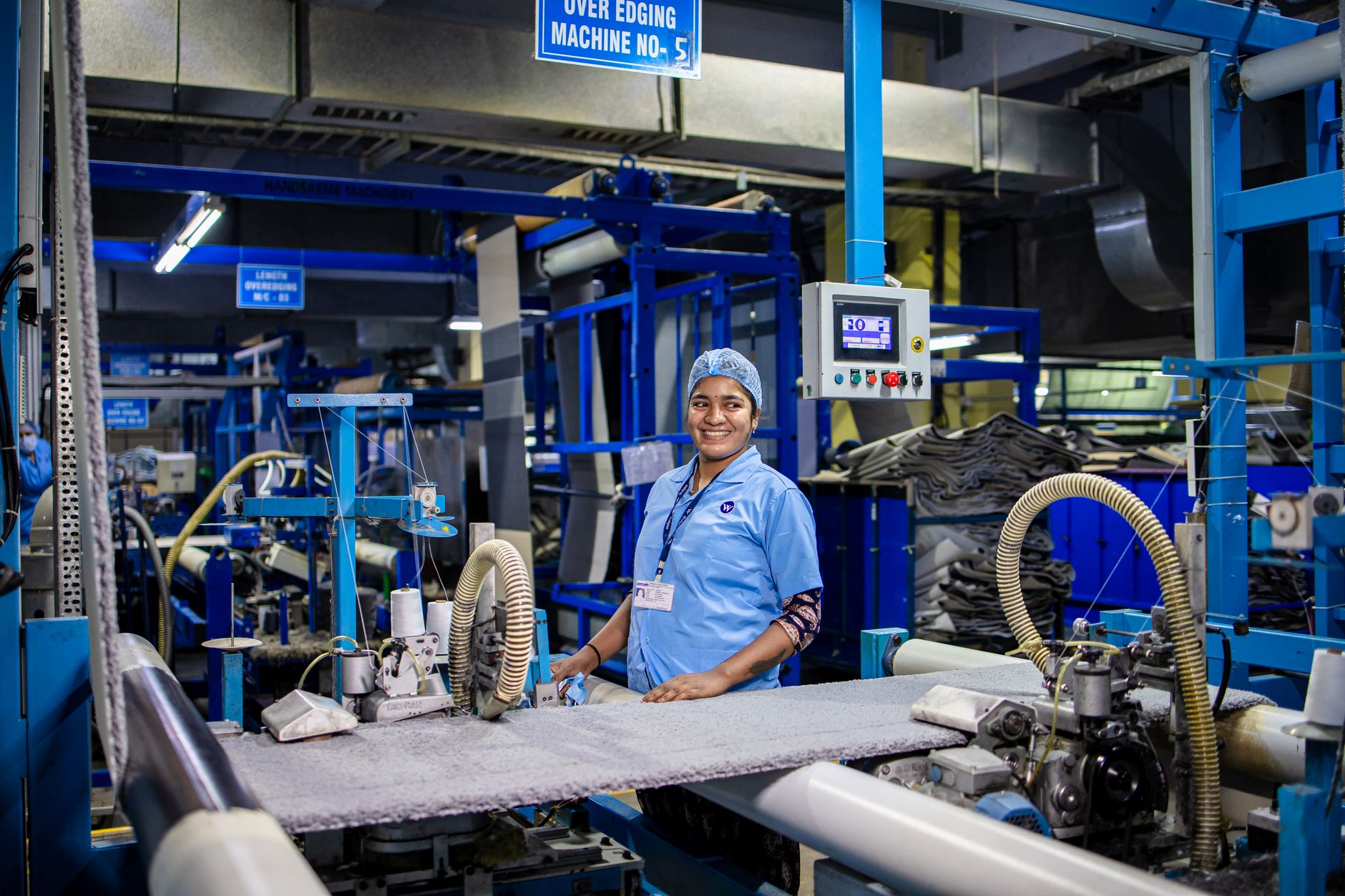
Imagine a loom that can predict a thread break before it happens, a dyeing line that self‑optimizes for color consistency, and a supply chain that learns from every roll of fabric produced. That vision is no longer a futuristic sketch; it’s unfolding right now as ELİAR, a European leader in intelligent textile processing, plants its flagship operations in India. The move is more than a geographic expansion—it’s a strategic leap that could redefine how the world’s textile giants think about automation, sustainability, and market agility.
What's Going On
India has emerged as a fertile ground for high‑tech manufacturing, and Indian Textile Magazine recently detailed ELİAR’s multi‑billion‑dollar investment plan, which includes a state‑of‑the‑art research hub in Bengaluru, a series of AI‑powered production lines in Gujarat, and a joint venture with a leading Indian textile conglomerate. The company’s CEO, Dr. Anika Müller, described the initiative as “the next chapter in our journey to make textile manufacturing as intelligent as the software that runs it.”
The core of ELİAR’s offering is a suite of AI algorithms that monitor every sensor on a production line—from temperature and humidity to motor vibrations and dye concentration. These algorithms feed into a cloud‑based analytics platform that provides real‑time dashboards, automated alerts, and prescriptive recommendations. By integrating this technology with India’s vast pool of engineering talent and its burgeoning digital infrastructure, ELİAR aims to cut cycle times by up to 30 percent and reduce energy consumption by 20 percent across its pilot facilities.
Beyond the technology, the partnership model is worth noting. ELİAR is not simply setting up a foreign factory; it is co‑creating solutions with Indian universities, research institutes, and local startups. The company has signed memorandums of understanding with the Indian Institute of Technology Madras and several AI incubators in Hyderabad, ensuring that the innovation pipeline remains vibrant and locally relevant. This collaborative ecosystem is designed to accelerate the development of region‑specific use cases—such as handling cotton varieties unique to the Indian subcontinent—while also feeding back improvements to ELİAR’s global product suite.
Why This Matters
The textile sector accounts for roughly 2 percent of global GDP and employs over 300 million people worldwide. However, it has long struggled with inefficiencies, waste, and a reputation for labor‑intensive processes. According to a recent Predictive Maintenance Market report, manufacturers that adopt AI‑driven maintenance see a 25‑40 percent reduction in unplanned downtime and a measurable uplift in product quality. ELİAR’s rollout in India could serve as a benchmark for the entire industry, demonstrating that intelligent automation is scalable even in markets with traditionally fragmented supply chains.
From an environmental perspective, smarter processing translates directly into lower water usage, reduced chemical runoff, and a smaller carbon footprint. The World Bank estimates that the textile industry is responsible for 10 percent of global carbon emissions. By optimizing dyeing cycles and minimizing waste, ELİAR’s technology could help Indian manufacturers meet increasingly stringent sustainability standards demanded by European and North American buyers.
Stakeholders across the value chain stand to benefit. Large apparel brands will gain more reliable sourcing and traceability, while mid‑size manufacturers can compete on quality without massive capital outlays. Workers, too, are part of the equation; predictive maintenance reduces the likelihood of hazardous equipment failures, creating safer workplaces. Moreover, the upskilling programs tied to ELİAR’s Indian hubs promise to elevate the technical expertise of thousands of engineers and operators.
What It Means for the Industry
ELİAR’s entry into India signals a shift from isolated automation projects to holistic, data‑centric ecosystems. Competitors will need to rethink their roadmaps, moving beyond simple robotics toward integrated AI platforms that can learn, adapt, and continuously improve. The company’s open‑API approach, which allows third‑party developers to plug in custom analytics or visualization tools, could spark a new wave of SaaS solutions tailored to niche textile processes.
One immediate implication is the democratization of advanced analytics. Historically, only the largest mills could afford in‑house data science teams. With cloud‑native services and modular licensing, even small factories can now access predictive insights on a subscription basis. This could flatten the competitive landscape, encouraging innovation at the grassroots level.
Strategically, the partnership model also raises questions about intellectual property and data ownership. ELİAR has pledged to adopt a “data‑trust” framework, ensuring that raw sensor data remains with the plant owner while aggregated insights are shared under mutually agreed terms. This balance aims to protect proprietary processes while still fostering collaborative improvement—a stance that resonates with the broader AI ethics conversation.
Interestingly, the move dovetails with developments in unrelated sectors, such as the recent launch of Anthropic’s new Fable release, which underscores a trend toward more accessible, cost‑effective AI tools. As AI models become cheaper and easier to deploy, the barrier to embedding intelligence in traditionally “hard‑industrial” environments like textile mills continues to fall.
What Happens Next
The next few quarters will be crucial in translating vision into measurable outcomes. ELİAR has outlined a phased rollout: the first production line in Gujarat is slated to go live by Q2 2027, followed by a second line in Maharashtra by the end of the year. The company’s spokesperson highlighted that the full announcement includes a roadmap for expanding the AI platform to downstream processes such as finishing, packaging, and logistics.
Investors and industry watchers will be looking for key performance indicators—downtime reduction, energy savings, defect rates, and return on investment—to gauge the success of the pilot. If the metrics align with the projected figures, it is likely that other textile hubs in Southeast Asia, Africa, and Latin America will see similar partnerships emerge, creating a ripple effect that could accelerate the global transition to intelligent manufacturing.
In the meantime, the conversation is already shifting from “if” to “how.” Workshops hosted by ELİAR in collaboration with Indian trade bodies are scheduled throughout 2027, aimed at educating stakeholders on best practices for data governance, workforce upskilling, and sustainable production. The company’s commitment to open dialogue suggests that the journey will be iterative, with feedback loops informing both technology refinements and policy frameworks.
Ultimately, the convergence of AI, local expertise, and a clear sustainability agenda positions ELİAR’s Indian venture as a potential blueprint for the next generation of manufacturing. Whether you are a textile executive, a technology investor, or a sustainability advocate, the developments unfolding in Bengaluru and Gujarat merit close attention. The fabric of the future is being woven today—one intelligent thread at a time.


