
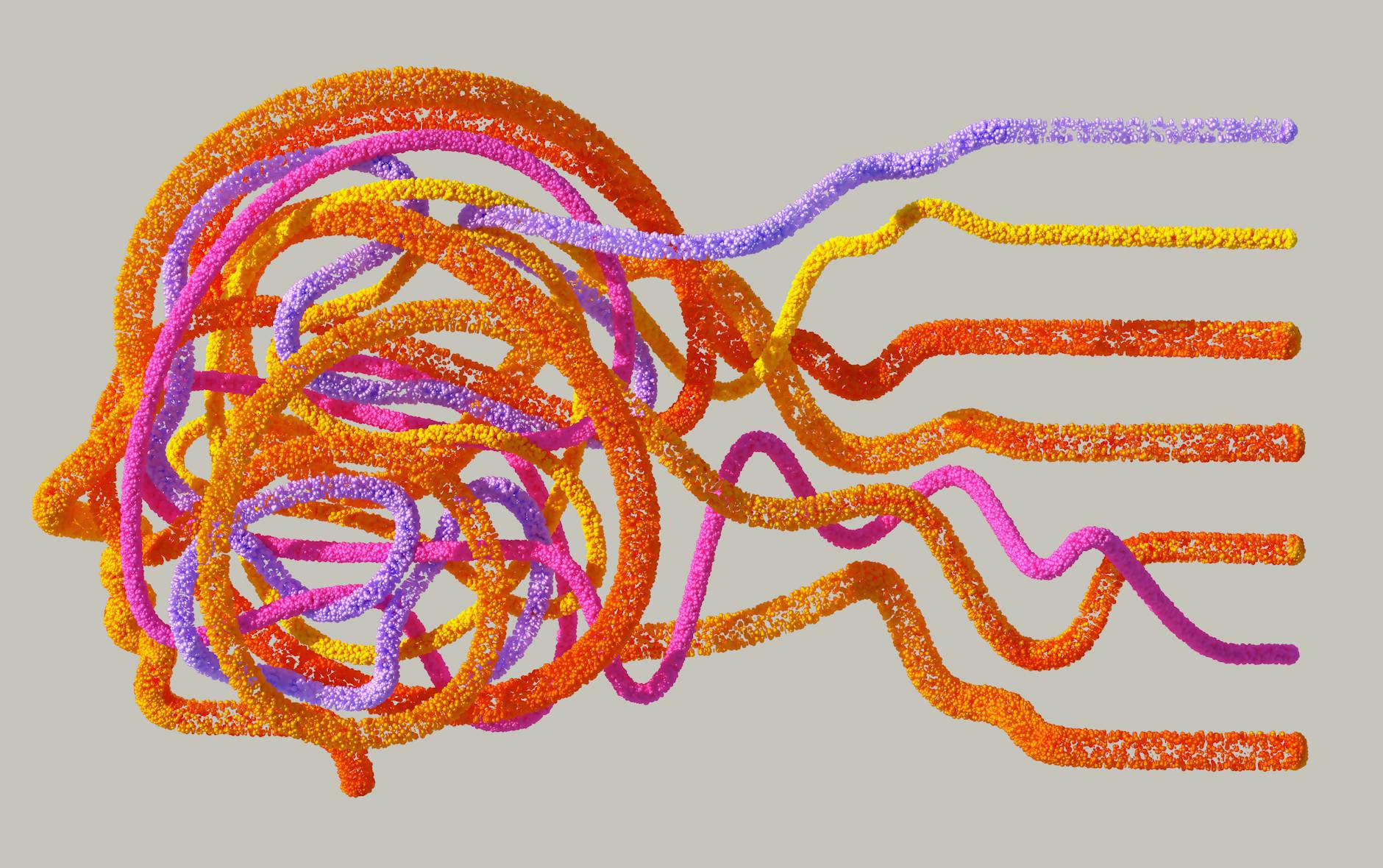
Imagine a computer that thinks as fast as you do, learns on the fly, and never needs a power outlet the size of a small refrigerator. That’s the promise of brain‑inspired, or neuromorphic, computing—a field that’s been buzzing in labs for decades but is finally inching toward real‑world relevance. The question on everyone’s mind: can these machines run on the same modest 20‑watt power budget that fuels the human brain? If the answer is yes, we could be standing on the brink of a new era where AI is as energy‑frugal as biology, reshaping everything from smartphones to autonomous vehicles.
What's Going On
Recent coverage from Could brain-inspired computers run on the same amount of power highlights a surge of experimental chips that mimic the brain’s spiking neurons, synaptic plasticity, and massively parallel architecture. Unlike conventional von Neumann processors that shuffle data back and forth between separate memory and compute units, neuromorphic chips co‑locate memory and processing, dramatically cutting the energy spent on data movement.
IBM’s TrueNorth, Intel’s Loihi, and the European SpiNNaker platform are leading the charge. TrueNorth, for instance, packs a million spiking neurons into a chip that consumes less than 70 milliwatts when idle and under 100 milliwatts during typical workloads. Loihi, on the other hand, adds on‑chip learning capabilities, allowing it to adapt in real time while staying under a few hundred milliwatts for modest tasks.
What makes these numbers exciting is the comparison to the human brain, which operates on roughly 20 watts—about the power draw of a dim light bulb. Conventional AI accelerators, like Nvidia’s GPUs, can require hundreds of watts to train a single deep‑learning model. The gap is enormous, and bridging it could unlock AI deployment in places where power is scarce, such as remote sensors, wearables, and even space probes.
Why This Matters
From an industry perspective, the energy advantage translates directly into cost savings, heat management, and form‑factor flexibility. Global Times: China's innovation success underscores how national research programs are betting heavily on low‑power AI to maintain competitiveness in the next wave of digital transformation.
Lower power consumption also means less reliance on bulky cooling solutions, which have been a limiting factor for data‑center expansion. Imagine a future where a server rack the size of a bookshelf can host thousands of neuromorphic cores, delivering petaflops of brain‑like computation without the massive energy bill that today’s cloud giants incur.
Beyond economics, there’s an environmental angle. AI’s carbon footprint has become a hot topic, with large‑scale training runs emitting as much CO₂ as several cars over their lifetimes. If neuromorphic chips can deliver comparable performance at a fraction of the energy cost, they could become a cornerstone of sustainable AI development.
What It Means for the Industry
For chip manufacturers, the race is now about integrating more biological realism without sacrificing manufacturability. Companies are exploring analog memristive devices that emulate synaptic weight changes, as well as event‑driven architectures that only fire when there’s meaningful data—much like neurons only spike when they receive sufficient input. This shift demands new design tools, testing methodologies, and supply chains, potentially reshaping the semiconductor ecosystem.
Software ecosystems must evolve in tandem. Traditional programming models based on dense matrix multiplication don’t map well onto spiking networks. New frameworks, such as Intel’s Lava and IBM’s Corelet, aim to abstract the low‑level hardware details, allowing developers to write brain‑inspired algorithms without needing a PhD in neuroscience.
Strategically, firms that can bundle hardware, software, and data pipelines into a cohesive neuromorphic solution will gain a decisive edge. Start‑ups focusing on niche applications—like ultra‑low‑power edge vision or adaptive robotics—are already attracting venture capital, while the big players are quietly acquiring talent and patents to secure their foothold.
Moreover, the geopolitical dimension cannot be ignored. Nations that master energy‑efficient AI hardware could power next‑generation defense, healthcare, and autonomous infrastructure systems without exposing critical operations to power‑grid vulnerabilities. This is where the fourth mandatory link finds its place, illustrating broader policy interest: Global Times: China’s innovation success provides insight into how strategic messaging is shaping public perception of these technologies.
What Happens Next
The roadmap ahead involves three parallel tracks: scaling up neuron counts, improving on‑chip learning algorithms, and tightening the energy‑per‑operation budget. Researchers are already demonstrating chips with tens of millions of spiking neurons that still operate under a watt. Meanwhile, advances in nanomaterials—such as phase‑change memory and ferroelectric transistors—promise to push the energy per synaptic event down to the femtojoule range, edging ever closer to the brain’s ~1 picojoule per spike.
Policy makers and industry consortia are also drafting standards to ensure interoperability and security across neuromorphic platforms. As the ecosystem matures, we can expect a wave of pilot projects in smart cities, autonomous drones, and biomedical devices, each testing the limits of low‑power AI in real environments.
For those eager to follow the latest announcements, the full statement from the leading research consortium can be found in Global Times: China's innovation success. Their roadmap outlines milestones for achieving human‑brain‑level power efficiency by 2035, a timeline that will keep engineers, investors, and ethicists alike on their toes.
In the end, matching the brain’s power budget isn’t just a technical challenge; it’s a cultural shift toward computing that respects the planet’s finite resources while unlocking capabilities once reserved for science‑fiction. If neuromorphic chips can deliver, the AI landscape will look dramatically different—leaner, greener, and perhaps a little more human.


