
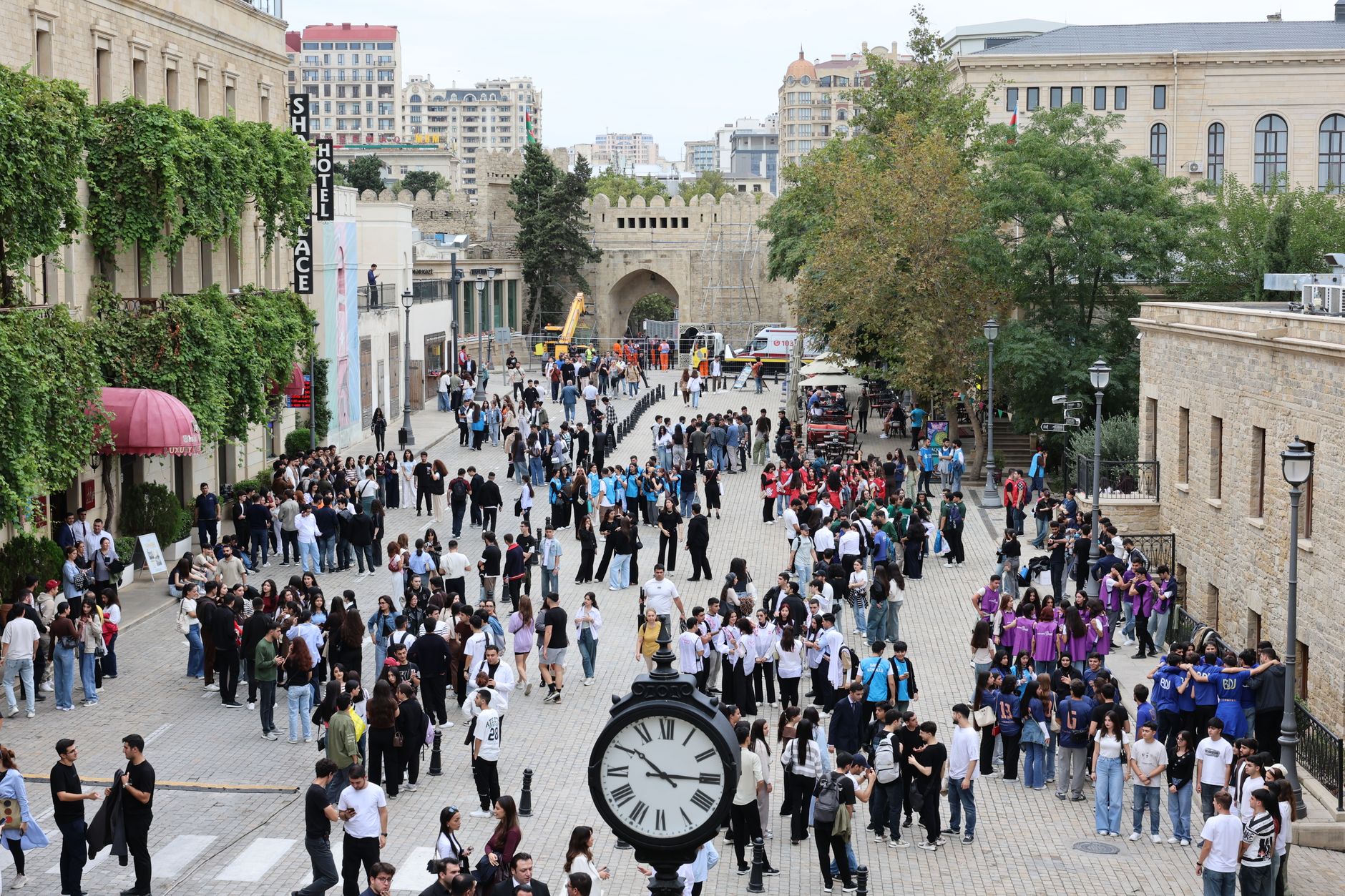
When the sun dipped behind Baku’s shimmering Caspian horizon on the final day of Baku ID 2026, the city’s skyline seemed to pulse with the electric buzz of a thousand new ideas. From autonomous delivery drones that navigated the historic streets to AI‑driven traffic management systems that promised to cut congestion by a third, the festival left no stone unturned in its quest to turn Azerbaijan’s capital into a living laboratory of tomorrow.
What's Going On
According to “Baku ID 2026” Innovation Festival Concl, the event drew over 5,000 participants from more than 30 countries, including tech giants, start‑up founders, and city planners. The festival’s flagship exhibit was the “Smart Baku” pavilion, where developers showcased AI‑powered solutions ranging from predictive maintenance for public transport to real‑time language translation kiosks for tourists.
The organizers, in partnership with the Ministry of Digital Development, emphasized that the festival was not just a showcase but a launchpad for collaborative projects. Over 50 joint ventures were announced, with a combined investment of $120 million earmarked for the next phase of the city’s digital transformation.
Beyond the hardware and software demos, the event also featured a series of keynote speeches and panel discussions. Highlights included a deep dive into the ethical considerations of AI deployment in public spaces, a session on data privacy laws tailored for emerging markets, and a live hackathon that culminated in a prototype for an AI‑driven waste‑sorting system.
Why This Matters
Industry analysts note that the momentum generated at Baku ID 2026 aligns with global trends in edge computing and AI integration. As How Edge AI Drives The Next Generation Of Digital Experiences illustrates, localizing AI processing reduces latency and enhances user privacy—critical factors for smart city applications.
For Azerbaijan, the implications are twofold. First, the country is positioning itself as a regional hub for tech innovation, attracting foreign direct investment and fostering a vibrant start‑up ecosystem. Second, the adoption of AI‑driven public services could dramatically improve quality of life, from smarter energy grids to predictive public health alerts.
The ripple effects extend to neighboring regions as well. As Baku’s smart city blueprint gains traction, it sets a precedent for other Caspian economies to follow suit, potentially catalyzing a wave of digital modernization across the area.
What It Means for the Industry
From a tech perspective, the festival underscored the growing convergence between AI and IoT. The integration of edge AI into everyday devices—smart traffic lights, autonomous buses, and even AI‑enabled streetlights—illustrates a shift from centralized cloud solutions to distributed intelligence.
Strategically, companies that can offer modular, scalable AI solutions stand to benefit. The demand for plug‑and‑play AI modules that can be deployed across various municipal infrastructures is rising, especially as cities seek to upgrade legacy systems without massive overhauls.
Moreover, the festival highlighted the importance of data sovereignty. With data residency laws tightening worldwide, local AI solutions that process data on‑premise or within regional data centers are becoming a competitive advantage.
What Happens Next
The full announcement can be found in the Press Release News: "Baku ID 2026" Innov, detailing the roadmap for the next five years. Key milestones include the deployment of the AI‑driven waste‑sorting system in 10 districts by 2028 and the rollout of an AI‑based traffic management platform across the city’s major arteries by 2029.
In addition, a series of public‑private partnership agreements will be finalized in the coming months, aiming to bring the city’s smart initiatives to the next level. These agreements will likely involve technology vendors, local universities, and civic organizations working together to pilot new solutions in real‑world settings.
For developers and entrepreneurs, the festival’s conclusion signals a call to action. With the city’s infrastructure now primed for experimentation, there is an unprecedented opportunity to test, iterate, and scale solutions that can later be replicated in other urban environments.
Looking ahead, the Baku government has pledged to maintain an open innovation framework, encouraging continuous collaboration between academia, industry, and the public sector. This inclusive approach is expected to keep the city at the forefront of AI‑driven urban development.
For deeper insights, read more here.
In closing, Baku ID 2026 was more than a festival—it was a declaration of intent. The city’s leaders, innovators, and citizens have collectively set a bold vision: to harness AI and edge computing to create a smarter, more resilient urban future. As the world watches, Azerbaijan’s capital is poised to become a beacon for digital transformation, proving that ambition, when paired with technology, can rewrite the narrative of a city.


