
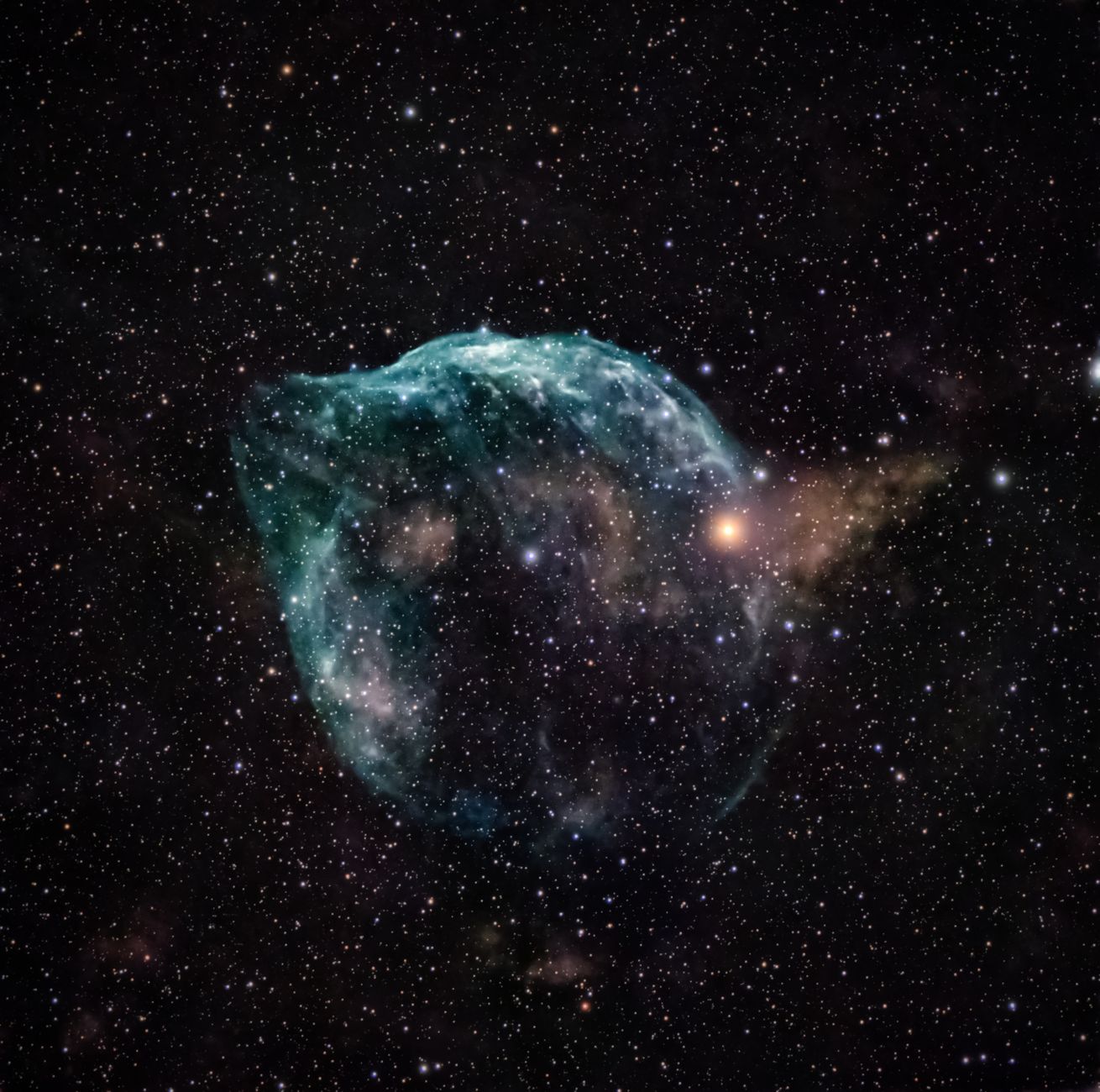
Imagine staring up at the night sky for generations, cataloguing stars, galaxies, and nebulae, only to realize that a whole family of objects has been hiding right under our telescopes the whole time. That’s exactly the thrill that’s buzzing through observatories worldwide right now—a fresh class of celestial bodies has been confirmed, and it’s turning the textbook definitions of “star” and “planet” on their heads. This isn’t a fleeting headline; it’s a paradigm shift that will ripple through astrophysics, instrumentation design, and even the way we teach the cosmos to the next generation of stargazers.
What's Going On
In a paper that’s already generating a flurry of citations, a consortium of international astronomers announced the discovery of what they’re calling “ultra‑diffuse stellar remnants.” According to Astronomers reveal a new type of celestial object, these remnants are faint, low‑mass structures that occupy the same size range as dwarf galaxies but emit far less light, making them virtually invisible to traditional surveys that focus on brightness thresholds.
The breakthrough came from re‑analyzing archival data from the Gaia mission and the Dark Energy Survey with a machine‑learning algorithm specifically tuned to flag anomalously low surface‑brightness objects. What the algorithm uncovered were dozens of candidates that had been dismissed as noise or background fluctuations for years. Follow‑up spectroscopy with the Keck Observatory confirmed that these objects share a common spectral fingerprint: a mix of ancient, metal‑poor stars interspersed with pockets of ionized gas, suggesting they are the fossilized cores of once‑active dwarf galaxies stripped of their outer layers by gravitational interactions.
What makes this class truly novel is its hybrid nature. They are too massive to be ordinary star clusters, yet too dim to qualify as full‑blown galaxies. Their existence forces us to rethink the evolutionary pathways that shape small‑scale structures in the universe. Were they born this way, or are they the remnants of violent encounters—tidal stripping, ram‑pressure stripping, or even past mergers? The data hint at a chaotic past, but the story is only beginning to unfold.
Why This Matters
Beyond the pure awe factor, the discovery has tangible implications for several research frontiers. industry analysts note that the methods used to surface these hidden objects—advanced pattern recognition combined with massive archival mining—are a blueprint for other fields where signal is buried in noise. In astrophysics, this could accelerate the hunt for elusive phenomena like primordial black holes or exotic dark‑matter substructures, which also manifest as faint, diffuse signals.
On a broader scale, the presence of ultra‑diffuse stellar remnants challenges the current models of galaxy formation that rely heavily on dark matter halo mass as the primary driver of visible structure. If a significant fraction of low‑mass halos host these dim remnants, our estimates of the baryon‑to‑dark‑matter ratio in the local universe may need a major revision. This, in turn, affects cosmological simulations that underpin everything from the rate of cosmic expansion to the distribution of large‑scale filaments.
Who feels the impact? Academic institutions will need to adjust curricula to incorporate this new class, while telescope time allocation committees may prioritize deeper, low‑surface‑brightness surveys. Private space ventures, especially those eyeing low‑cost, wide‑field imaging platforms, could find a niche market in mapping these faint structures, turning a once‑overlooked scientific curiosity into a commercial data product.
What It Means for the Industry
For the astronomical instrumentation industry, the discovery is a call to action. Existing detectors were optimized for bright, point‑like sources, but the ultra‑diffuse remnants demand cameras with ultra‑low read‑noise, high dynamic range, and wide‑field optics capable of capturing subtle gradients across several arcminutes. Companies developing next‑generation CMOS sensors are already exploring designs that could double the sensitivity for low‑surface‑brightness work, and the market potential is now clearer than ever.
Strategically, observatories might pivot their survey strategies. Instead of the traditional “deep‑field, narrow‑band” approach, a hybrid model that combines moderate depth with expansive sky coverage could become the new standard. This shift would also influence data‑processing pipelines, pushing for real‑time AI‑driven anomaly detection that flags faint structures as they are recorded, rather than after the fact.
Moreover, the discovery dovetails with larger computational initiatives. The sheer volume of data required to isolate these objects aligns with the capabilities of massive supercomputers, such as the one South Korea is planning. South Korea's supercomputer project promises the horsepower needed to run petascale simulations that can test formation scenarios for ultra‑diffuse remnants, linking observational data with theoretical models in unprecedented detail.
What Happens Next
The next phase will be a coordinated global campaign to map the full sky for these hidden objects. Teams are already drafting proposals for dedicated time on the Vera C. Rubin Observatory, whose Legacy Survey of Space and Time (LSST) is uniquely suited to capture the low‑surface‑brightness regime. the full announcement from the consortium outlines a roadmap that includes follow‑up spectroscopy, high‑resolution imaging with the James Webb Space Telescope, and cross‑matching with radio surveys to search for any lingering gas signatures.
In the meantime, the community is buzzing about the theoretical implications. Workshops are being scheduled at major conferences to brainstorm new models of dwarf galaxy disruption, and several graduate programs are launching thesis projects centered on the dynamics of ultra‑diffuse remnants. As more data pour in, we can expect a cascade of papers that will refine the classification, quantify their abundance, and perhaps even reveal a connection to dark‑matter physics.
Ultimately, the excitement isn’t just about adding another entry to the cosmic catalog. It’s a reminder that the universe still holds secrets in the most familiar places, waiting for the right combination of curiosity, technology, and perseverance to bring them to light. For anyone who has ever looked up and wondered what else might be out there, this discovery is a thrilling invitation to keep looking—and to keep questioning what we think we already know.


