
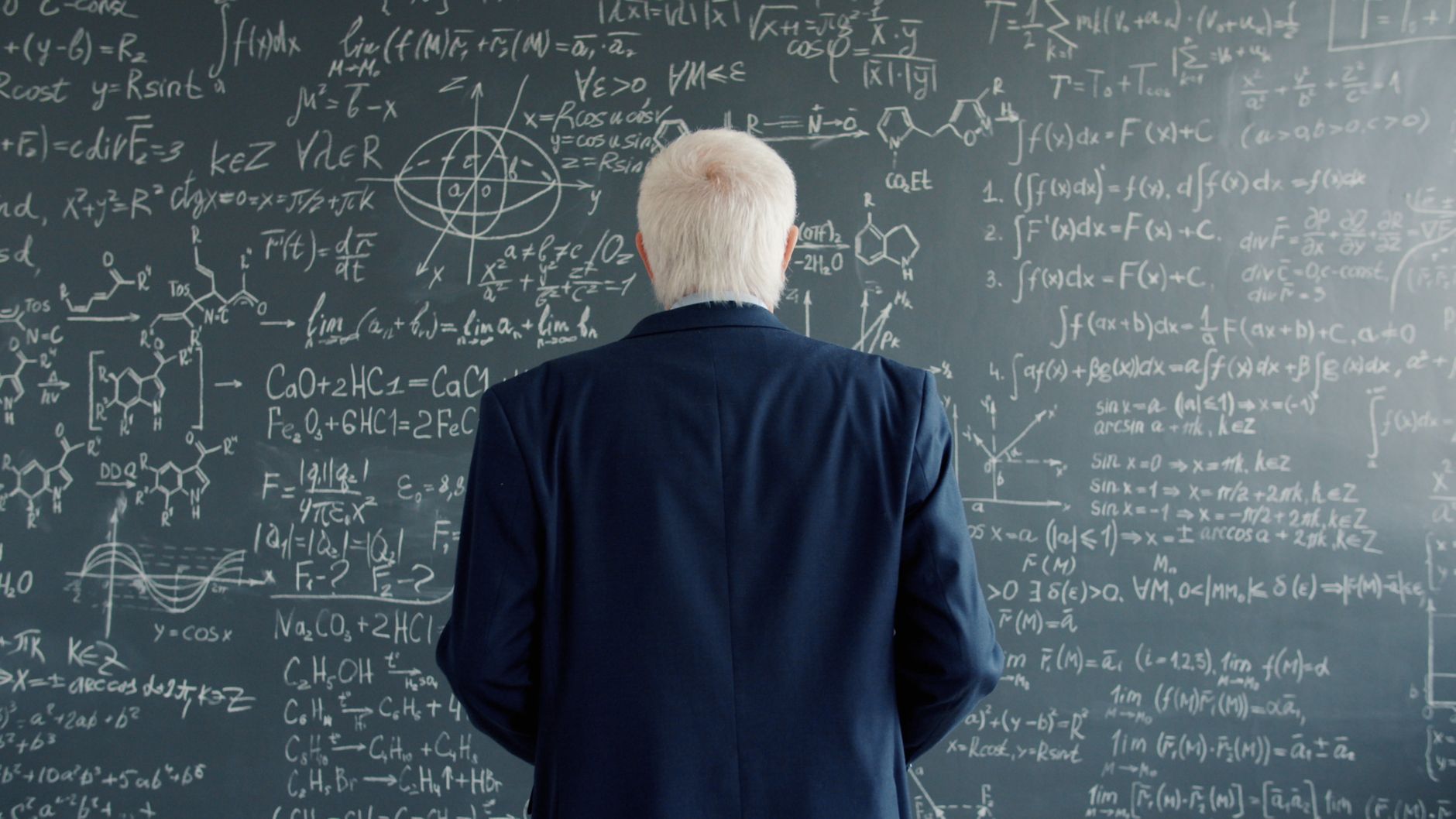
Imagine a world where an AI can sit down with a centuries‑old mathematical puzzle, translate it into a machine‑readable language, and produce a formal proof that satisfies the most stringent verification tools. That world isn’t a distant sci‑fi dream—it’s happening right now, and Anthropic’s Claude just proved it by tackling one of the most famous theorems in mathematics.
What's Going On
Anthropic announced that its flagship model, Claude, has successfully formalized Fermat’s Last Theorem (FLT) using the Lean proof assistant, a feat that required a grueling 11‑day sprint of prompt engineering, debugging, and iterative refinement. The effort was chronicled in detail by Anthropic 'formalizes' Fermat's Last Theorem, which highlighted both the triumphs and the frustrations of teaching a language model to think like a mathematician.
Formal verification is the process of converting a mathematical statement into a format that a computer can check for logical consistency. While human mathematicians have long used informal reasoning, formal methods demand a level of precision that leaves no room for ambiguity. Claude’s journey began with a high‑level description of FLT, then progressed through a cascade of lemmas, definitions, and auxiliary theorems until the final Lean script was ready for the proof checker.
The team behind the project emphasized that the 11‑day timeline was not a measure of Claude’s raw speed but rather a reflection of the iterative dialogue required to coax the model into producing correct, syntactically valid Lean code. Each failed attempt sparked a new prompt, a fresh debugging session, or a subtle tweak to the model’s temperature settings. In the end, the result was a complete, machine‑verified proof that aligns with Andrew Wiles’ historic 1994 solution, now encoded in a language that computers can understand without human mediation.
Why This Matters
Beyond the novelty of an AI handling a legendary theorem, the achievement signals a shift in how we might approach complex, logic‑heavy tasks across industries. As The wages of American workers are under pressure article notes, AI’s growing role is already reshaping compensation structures and job expectations. If an AI can assist—or even lead—in formal proof generation, the same techniques could be applied to software verification, security auditing, and regulatory compliance, potentially reducing the need for highly specialized human experts in those domains.
The broader implication is a reallocation of intellectual labor. Engineers and mathematicians could spend more time on creative problem framing and less on the tedious minutiae of formal syntax. This mirrors trends in other sectors where AI is automating routine analysis, allowing professionals to focus on strategic decision‑making. However, the 11‑day effort also serves as a cautionary tale: AI is powerful, but it still requires human guidance, especially when navigating intricate logical landscapes.
Who stands to benefit the most? Companies building safety‑critical systems—think aerospace, autonomous vehicles, and medical devices—already rely on formal methods to guarantee correctness. An AI‑augmented pipeline could accelerate certification cycles, cut costs, and improve reliability. Academic institutions might also leverage Claude‑style models to teach formal logic, giving students a hands‑on partner that can instantly validate their reasoning.
What It Means for the Industry
From a strategic standpoint, Anthropic’s breakthrough could ignite a new wave of investment in AI‑driven formal verification platforms. Start‑ups may emerge that specialize in domain‑specific proof assistants, integrating large language models with existing verification tools like Coq, Isabelle, and Lean. Existing cloud providers could bundle these capabilities into their developer ecosystems, offering “proof‑as‑a‑service” that abstracts away the steep learning curve of formal languages.
Security is another arena where this technology could have immediate impact. The same techniques used to formalize FLT could be repurposed to verify cryptographic protocols, ensuring they are free from subtle implementation bugs that often lead to real‑world exploits. In fact, the recent security roundup highlighted how sophisticated attacks exploit misconfigurations and unverified code paths Week in review: Linux rootkit deployed, underscoring the need for rigorous proof‑based defenses.
On the talent front, the demand for “prompt engineers” who can translate mathematical intent into effective model interactions will rise. These hybrid roles blend deep domain knowledge with an understanding of model behavior, prompting a redefinition of skill sets in both academia and industry. Companies that invest early in upskilling their workforce for this new paradigm could gain a competitive edge, especially as regulatory bodies begin to expect formal verification for high‑impact software.
What Happens Next
The next logical step is scaling the approach beyond a single theorem. Anthropic plans to open‑source parts of the workflow, inviting the research community to refine prompt strategies, improve error handling, and extend the methodology to other mathematical domains. For a deeper dive into the timeline and the team’s reflections, see the coverage in Week 37 – 2026, which chronicles the project's milestones and the broader conversation about AI‑augmented research.
Looking ahead, we can expect a cascade of collaborations between AI labs, theorem‑proving communities, and industry consortia. As the technology matures, the 11‑day effort may shrink dramatically, turning what was once a marathon into a sprint. Yet the human element will remain essential—guiding the AI, interpreting results, and ensuring that the formal proofs align with real‑world constraints.
In the meantime, the math world watches with a mixture of awe and skepticism. Claude’s success doesn’t rewrite Fermat’s Last Theorem; it simply translates an existing proof into a new language. But that translation is a powerful proof of concept, showing that large language models can be harnessed for the most exacting logical tasks. If the trend continues, the line between human insight and machine verification will blur, opening doors to discoveries we haven’t even imagined yet.


