
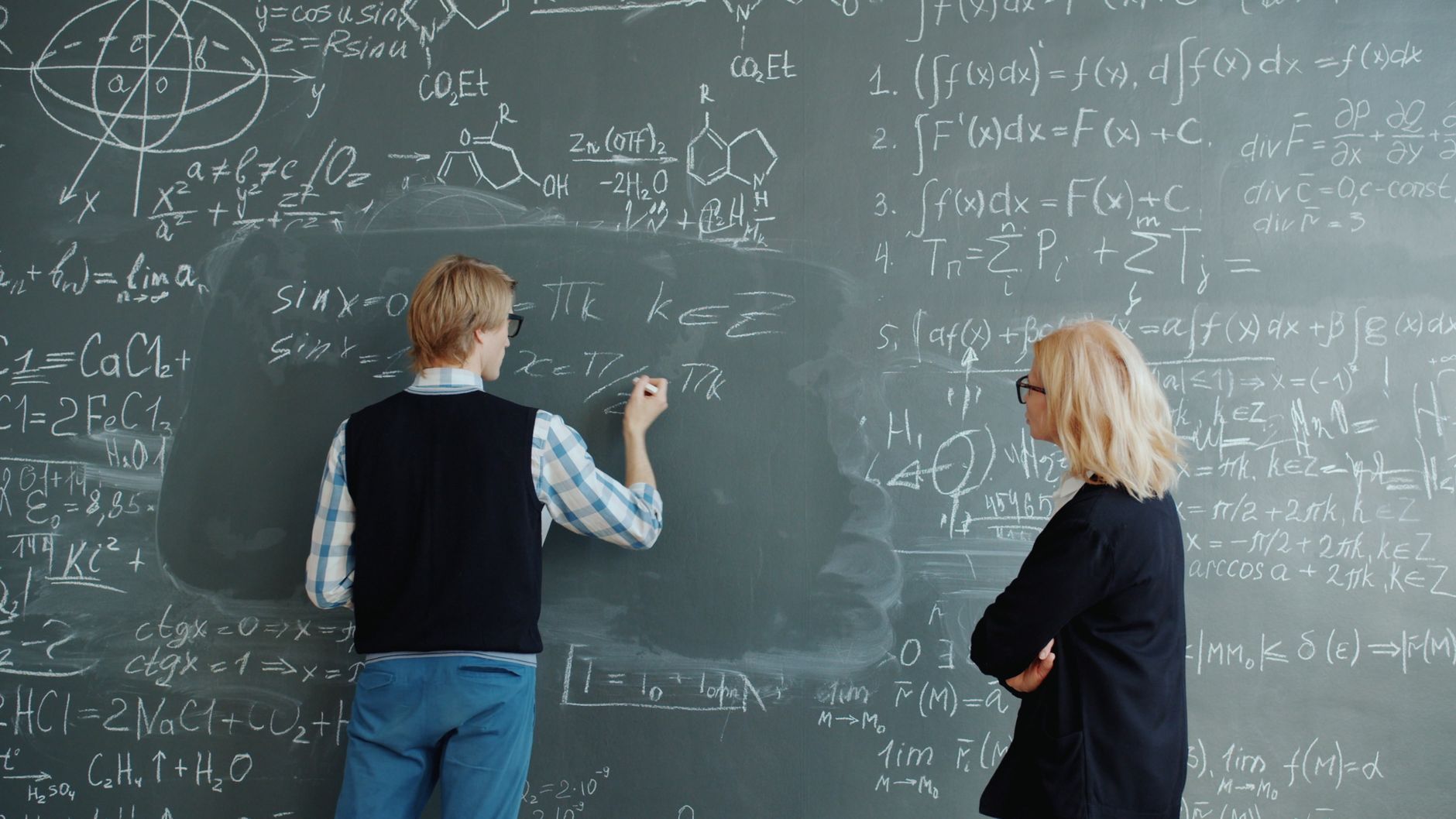
In a world where AI can compose music, write code, and even draft legal briefs, one breakthrough stands out: a machine that took an entire mathematician’s lifetime of work and distilled it into an 11‑day formal proof.
What's Going On
TechRadar reports that Anthropic, the company behind the Claude family of large language models, has achieved a milestone in formal mathematics by fully formalizing Fermat’s Last Theorem. The project, which required a massive computational effort and a meticulous chain of logical deductions, culminated in a 11‑day process that produced a verifiable proof in the Lean theorem prover.
For those unfamiliar with formal verification, the goal is to encode mathematical statements and proofs in a language that a computer can check for correctness. This removes the possibility of human oversight or subtle errors that can creep into handwritten proofs. Fermat’s Last Theorem, famously proven by Andrew Wiles in 1994, has long been a touchstone for the capabilities of formal methods, and its formalization had been an open challenge for decades.
Anthropic’s approach was not simply to run a pre‑existing proof through a verifier. Instead, they leveraged Claude’s natural language understanding to generate candidate proof steps, translate them into Lean syntax, and iteratively refine the proof structure. The process involved thousands of interactions between the model and a team of expert mathematicians who acted as both validators and guideposts, steering the AI away from dead ends and toward fruitful avenues of reasoning.
Why This Matters
Industry analysts note that the success of this project has a ripple effect across multiple sectors. The wages of American workers are under pressure, and AI’s potential role is drawing more attention, as highlighted in recent reports. By automating the tedious and error‑prone aspects of formal proof construction, AI can free human experts to focus on higher‑level conceptual breakthroughs.
Beyond the immediate impact on mathematics, the implications extend to software engineering, cryptography, and even regulatory compliance. Formal verification is already a cornerstone of safety‑critical systems such as aviation control software and autonomous vehicles. A more powerful AI that can handle complex proofs with minimal human oversight could dramatically accelerate the development cycle for these systems, reducing both time to market and the risk of catastrophic failures.
Moreover, the project underscores a philosophical shift in how we view mathematical knowledge. Traditionally, proofs were seen as human artifacts—elegant but fallible. With AI capable of generating verifiable proofs, the boundary between human intuition and machine logic blurs, raising questions about authorship, intellectual property, and the future of mathematical education.
What It Means for the Industry
The formalization effort demonstrates that large language models can transcend natural language generation and tackle highly structured, domain‑specific tasks. This opens doors for AI to contribute to areas that require rigorous logical consistency, such as automated theorem proving, formal verification of hardware designs, and even automated legal contract drafting that must adhere to strict regulatory frameworks.
From a strategic perspective, companies that invest early in AI‑augmented formal methods stand to gain a competitive edge. By embedding such capabilities into their product pipelines, they can deliver higher assurance levels, comply with stricter safety standards, and reduce the cost of manual verification. The 11‑day timeline, while still substantial, is a dramatic improvement over the months or years that human teams would normally require.
However, the project also highlights the current limitations of AI in this domain. The reliance on human oversight for guidance and error correction means that AI is not yet a fully autonomous prover. The need for expert intervention suggests that, for now, AI will augment rather than replace human mathematicians and engineers.
Week in review: Linux rootkit deployed on F5 BIG‑IP APM devices, Cisco FMC bugs exploited. The same vigilance that protects infrastructure from such vulnerabilities can now be applied to safeguarding formal verification pipelines against subtle model errors or misinterpretations.
What Happens Next
The full announcement, which includes technical details and potential licensing models, is available for those interested in the next steps. The announcement outlines plans to open‑source the Lean codebase, provide APIs for integrating Claude’s proof generation capabilities, and collaborate with academic institutions to train the next generation of AI‑assisted mathematicians.
Looking ahead, the most exciting prospect is the possibility of AI contributing to proofs that are currently beyond human reach. With continued improvements in model architecture, training data, and verification frameworks, we could see AI tackling open problems in number theory, topology, and beyond. Each new formalized theorem will not only add to our mathematical knowledge but also refine the AI’s reasoning capabilities, creating a virtuous cycle of learning and discovery.
Ultimately, the 11‑day formalization of Fermat’s Last Theorem is more than a technical triumph; it is a testament to what collaborative human‑AI systems can achieve. As the boundaries of what AI can verify expand, so too will the horizons of human knowledge, opening a future where rigorous proofs are both faster and more reliable than ever before.


