
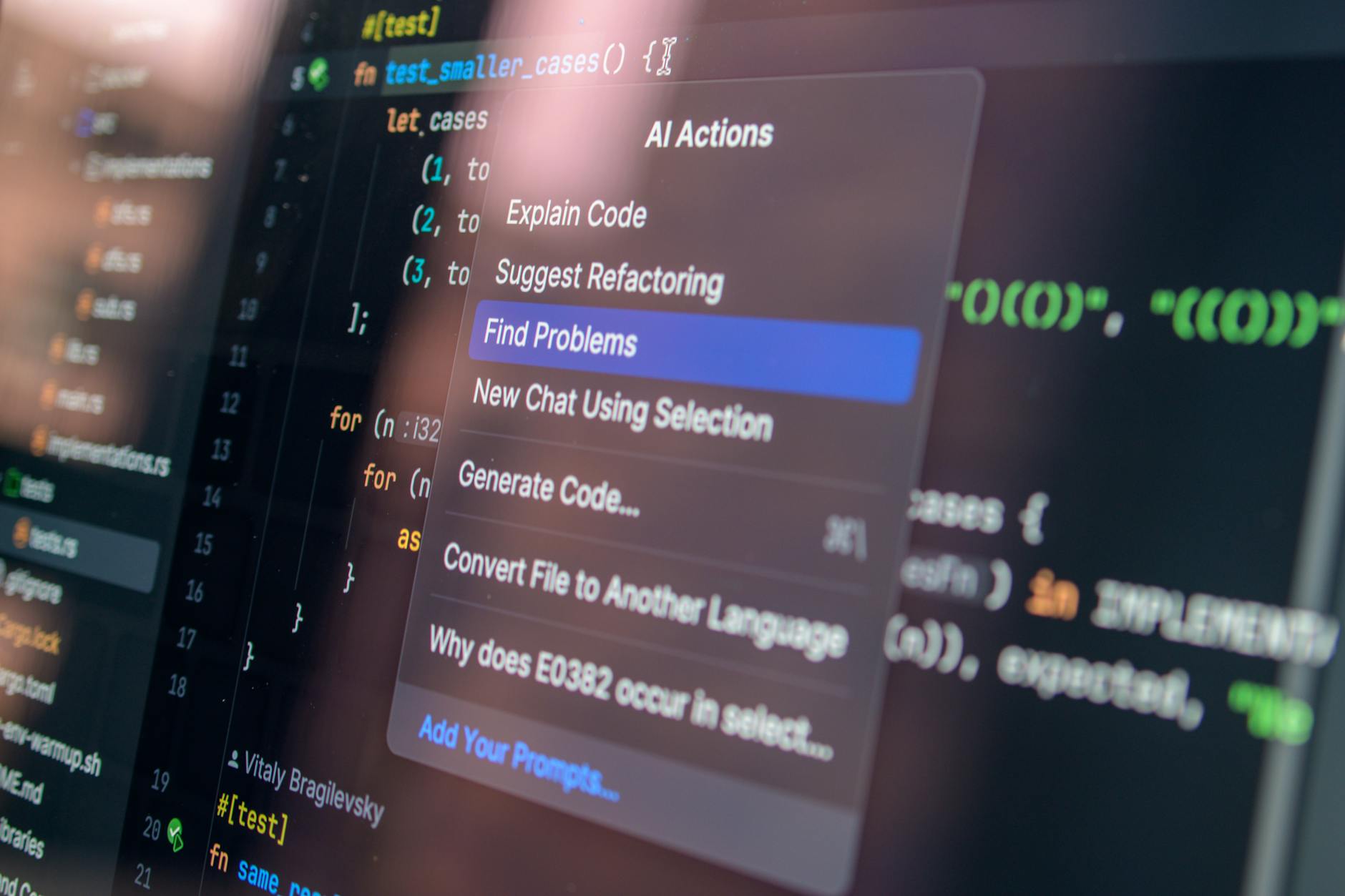
Picture a software team that can write a full microservice in minutes, test it automatically, and deploy it with a single command, all while an AI agent monitors performance, refactors code, and suggests improvements in real time. That future isn’t a distant sci‑fi dream—it’s already unfolding in the trenches of tech companies, startups, and even traditional industries that are finally embracing AI for software engineering.
What's Going On
According to the article AI-Assisted Software Development at Scale: From Code Generation to Engineering Agents, the evolution of AI in code creation has moved from simple code completion to sophisticated engineering agents capable of end‑to‑end software delivery. These agents can read requirements, design architecture, generate code, run tests, and even handle deployment—all while learning from each iteration.
The shift began with large language models (LLMs) like GPT‑4, which could produce boilerplate code or fix bugs with a few prompts. However, the real breakthrough came when teams integrated LLMs into their CI/CD pipelines, allowing the AI to understand project context, enforce coding standards, and even suggest refactors that improve maintainability.
Now, companies are deploying “engineering agents” that act like a senior developer: they keep track of feature tickets, understand the system’s architecture, and collaborate with human developers to deliver high‑quality code faster. This is not a one‑off experiment; it’s a scalable solution that can handle thousands of lines of code across multiple services with minimal human oversight.
Why This Matters
Industry analysts note Convincing industrial chemists to embrace AI in the lab how AI is transforming traditional domains by automating routine tasks and accelerating innovation. The same principles apply to software engineering: AI reduces the time from idea to production, lowers the risk of human error, and frees developers to focus on creative problem‑solving.
Beyond productivity, AI‑assisted development enhances security. By automatically scanning code for vulnerabilities, suggesting secure coding patterns, and even patching known issues, engineering agents act as a first line of defense against cyber threats. In an era where supply‑chain attacks are becoming more sophisticated, having an AI that continuously monitors code quality can be a game‑changer.
The ripple effect is felt across all sectors. Startups can prototype faster, enterprises can modernize legacy systems, and even regulated industries—like finance and healthcare—can achieve compliance more efficiently. The result? A more agile, secure, and cost‑effective software ecosystem.
What It Means for the Industry
From a strategic perspective, the rise of engineering agents forces a re‑thinking of talent management. Rather than hiring more developers, companies can invest in training AI systems and building robust integration pipelines. This shift can lead to a new skill set: developers become “AI‑augmented engineers” who focus on high‑value tasks while delegating routine coding to machines.
Moreover, the scalability of AI tools means that even small teams can compete with larger enterprises. A boutique firm can now deliver a product that once required a 20‑person dev team in half the time. This democratization of software creation could spur a wave of innovation across niche markets.
However, the transition is not without challenges. Trust in AI outputs remains a hurdle—developers must verify that generated code meets business logic and security requirements. Additionally, ethical considerations around data privacy and model bias must be addressed, especially when AI is trained on proprietary codebases.
What Happens Next
The full announcement Algo Trading Software in India - Technology for Faster and More Efficient Trading illustrates how AI‑driven automation is already being adopted in high‑stakes domains. As AI agents prove their worth in areas like algorithmic trading, we can expect broader adoption across sectors that require rapid, reliable software delivery.
Looking ahead, we anticipate two major trends: first, the integration of multimodal AI—combining text, code, and even visual design—to create truly autonomous development pipelines. Second, the emergence of open‑source AI‑engineering platforms that allow teams to customize agents for their specific workflows, fostering a collaborative ecosystem of shared best practices.
In conclusion, AI‑assisted software development is moving from a novelty to a mainstream capability. By embracing engineering agents, companies can accelerate innovation, improve security, and reshape the future of software engineering. The next decade will likely see a blend of human ingenuity and machine efficiency, driving a new era of productivity and creativity.
For those interested in how secure AI product development is handled at scale, Bacancy Technology Emerges as a Trusted Name in Secure AI Product Development With Security at Every Stage provides a case study of integrating security throughout the AI lifecycle.


